John Chigbu on laying the key foundation for Africa's development

Summary
Healthcare, education, and agriculture are the foundation Africa must build for development.
In this interview, John Chigbu, CEO and Chairman of the Board at Cassona Global Imaging Ltd., discusses the company's ongoing evolution in building Africa’s healthcare ecosystem and the foundational issues facing development on the continent. He spoke with Jide Akintunde, Managing Editor of Financial Nigeria publications.
Jide Akintunde (JA): 2026 has unfolded quite dramatically since you first featured in our CEO interview series last year. What are your reflections on 2025 and anticipations of the rest of 2026?
John Chigbu (JC): Indeed, it’s great to reconnect in 2026. In our previous conversation, I highlighted a critical reality: Sub-Saharan Africa faces severe healthcare challenges that remain largely unaddressed. These challenges have continued to define Cassona’s mission, which focuses on addressing these gaps and investing in our most valuable asset – human capital.
For us, 2025 was a year of consolidation. We strengthened our base in Ghana – our proof of concept – before expanding into Nigeria, a much larger market. In Ghana, we completed over 200 diagnostic imaging installations, became exclusive distributors for two multinational Original Equipment Manufacturers (OEMs), and led the implementation of their local warranty programmes.
But beyond growth, we asked a fundamental question: how do we build a healthcare system that serves the average person – not just those who can afford care abroad? That question now drives our strategy.
In three years, we’ve scaled from about 10 partially functioning units to over 225 installations, built a strong local engineering team, and trained more than 1,000 professionals on modern, AI-enabled equipment. We also introduced credit financing to improve access.
Now, we are evolving. Our vision is to develop “one-stop” healthcare institutions – co-located facilities where patients can consult doctors, run diagnostics, and receive treatment in one place. We are investing in talent by improving compensation and providing housing to attract skilled professionals, including those in the diaspora. We are also exploring robotic telesurgery in partnership with hospitals in China and the U.S.
In addition, we are introducing in-house insurance to enable patients to pay for care in instalments, subject to verifiable repayment capacity.
Nigeria represents a major opportunity. Our strategy – “advance and consolidate” – has guided our growth and will continue to define our expansion in 2026 and beyond.
JA: 2026 marks the beginning of the countdown of the last five years to 2030, the timeline for achieving the Sustainable Development Goals (SDGs). Do you think Africa will still make significant progress in development by the end of this decade?
JC: This question requires more context, as many people are still unfamiliar with the SDGs. In simple terms, the SDGs are the United Nations shared blueprint for peace and prosperity – for people and the planet – now and into the future.
Given the timeline for achieving these goals, my answer is unequivocal “no”.
For context, I refer to the 2030 Agenda for Sustainable Development, adopted by all UN Member States in 2015. The reality is that Africa cannot make meaningful progress toward these goals without a fundamental shift in policy.
African countries must rethink their development frameworks – understanding what truly drives growth, attracts foreign direct investment (FDI), and motivates their populations to strive for progress. Without this, the SDGs will remain aspirational rather than achievable.
JA: A significant policy shift has occurred in the United States, with the country rolling back Official Development Assistance (ODA) in several areas. This means African governments would have to mobilise FDI to complement local resources for financing development. In this context, how can Nigeria and other African countries attract more FDI in the coming years?
JC: The U.S. decision to scale back on ODA is driven by several factors, including the “America First” policy and rising national debt.
Personally, I support a reduction in aid to Africa. While it may seem counterintuitive, it forces policymakers – and all of us – to confront a fundamental question: what does it take to build a self-sustaining, thriving economy? True independence requires independent thinking.
Africa is richly endowed with natural resources, but that alone is not enough. FDI flows to environments defined by political stability, predictable returns, and investor-friendly regulations.
Having led offshoring initiatives for Fortune 500 companies into countries, I have seen firsthand what attracts capital. Stability and regulation are essential – but not sufficient. What ultimately drives transformative investment is industrial capacity.
China did not lift over 800 million people out of poverty by financialising its economy. It did so by building productive capacity across agriculture, manufacturing, and resource processing. Africa must follow a similar path by adding value to its own resources rather than exporting them in raw form.
The most critical factor in investment decisions is human capital – anchored in healthcare and education. On both fronts, Nigeria faces serious challenges. A weak healthcare system deters investment, as companies must account for the risks and costs of medical care. Likewise, an education system lacking practical, industry-relevant skills forces firms to invest heavily in training.
While Nigeria is strong in certain service sectors such as banking, these alone cannot build the industrial base needed for long-term transformation.
Infrastructure also remains critical – reliable power, transport, data systems, water, housing, and sanitation all influence investment decisions.
In the short term, Africa should focus on achievable priorities: strengthening healthcare, reducing disease burdens such as malaria, and reforming education to include practical skills – carpentry, welding, mechanics, and agriculture.
These are not minor steps – they are foundational. China’s rise began this way, and Germany’s strength still rests on technical and vocational excellence.
Ultimately, government has a central role to play. Predictable policies, investor-friendly regulations, and a decisive reduction in corruption are essential to changing the trajectory and unlocking meaningful investment.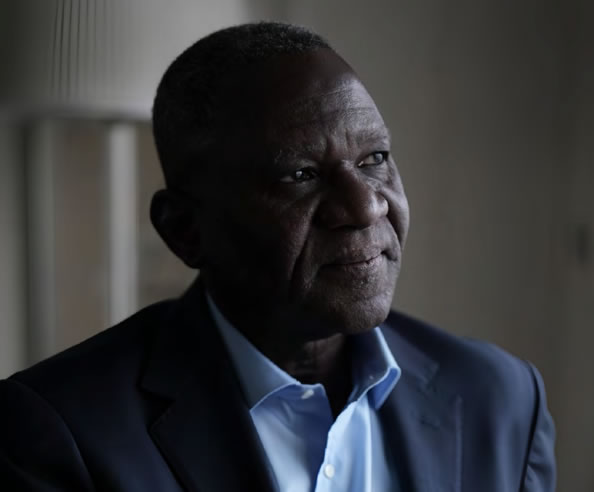
John Chigbu
JA: Cassona is investing in Africa’s health infrastructure and services. Before we look at the core infrastructure sector, what is your view on the investment deficit in healthcare facilities across African countries, and how can it be addressed progressively?
JC: African countries – particularly in Sub-Saharan Africa – face a deep healthcare deficit with roots in the colonial era. During colonial rule, hospitals were built and equipped to the standards of the time, but primarily to serve the colonisers.
The real decline began after political independence. While Africa gained political control, it did not achieve true economic independence. As a result, many countries lacked the capacity to make the economic decisions needed to generate wealth, build industrial capacity, and develop their natural resources for their own benefit.
Control over natural resources largely remained in foreign hands. In countries like Nigeria and Ghana, unfavourable agreements allowed multinational oil companies – Shell, BP, Chevron and others – to retain significant control over extraction and value chains. This has limited the resources available for domestic investment, including healthcare.
However, external factors alone do not explain the healthcare deficit. The reality is that limited public funds must compete with many urgent needs. At the same time, leadership priorities have often been misaligned. When public officials can access healthcare abroad, there is little incentive to invest in local systems. This pattern is not unique to Nigeria – it is widespread across the continent, with a few exceptions.
The private sector has also struggled to fill the gap. Healthcare is capital-intensive. It requires significant investment in infrastructure, equipment, and skilled personnel. Yet, local financial systems have historically failed to support this sector. Banks are often unwilling to extend credit to healthcare providers without substantial collateral, and hospital assets themselves are rarely accepted as security.
The result is a chronic underinvestment in healthcare infrastructure, leaving systems overstretched and populations underserved.
JA: Africa faces acute connectivity challenges in core infrastructure, including roads, rail, power, water, and airports. Digital infrastructure has also become important in the age of the digital revolution. How should countries prioritise these important needs?
JC: Indeed, much of Africa, again especially Sub-Saharan Africa, faces significant gaps in connectivity that are critical to lifting large segments of the population out of poverty, as you rightly noted. However, the most important driver of progress is often overlooked: human capital. In my view, countries must prioritise human capital development – specifically in healthcare, education, and agriculture.
We need a healthy population, the ability to feed ourselves, and an education system that builds practical skills that attract sustainable investment and support industrial growth.
The question of prioritisation should start with these three foundational drivers.
Infrastructure such as roads, railways, and airports enables the movement of goods and people. Clean water supports health and well-being. Digital infrastructure, such as data centres, networks, and software, facilitates communication and information exchange.
That said, what to prioritise depends on a country’s stage of development. For Sub-Saharan Africa, the priority should be clear: focus first on healthcare, agriculture, and education. These form the foundation upon which all other development is built.
JA: The governments, at the national and subnational levels, have been primarily responsible for the provision of core infrastructure, with digital infrastructure now almost entirely provided by the private sector. So, how should policymakers address the funding gap for core infrastructure when governments are already spending a significant share of their revenues on debt servicing?
JC: Debt servicing is a global issue, but how burdensome it becomes depends on how well a country manages its economy. Countries with strong industrial bases, solid infrastructure, and effective public-private collaboration – like China – are better positioned to manage debt sustainably.
In Africa, the challenge has been misallocation of resources and over-reliance on the government to provide infrastructure. We have not invested enough in the foundations that drive growth.
Smart governance requires strong public-private partnerships (PPP). This model works. Malaysia, for example, used PPPs to build its highways, with private investors funding projects and recovering costs through tolls.
This approach can and should be applied across critical infrastructure in Africa.
JA: PPP is indeed a strong option for financing public goods. Why are we not seeing many such projects being delivered?
JC: As I mentioned earlier, PPPs are widely used in developing economies because they allow governments to focus on essential services like water and basic infrastructure.
In Africa, adoption has been slow. Some argue this is due to vested interests benefiting from the status quo, but it is also true that PPP remains a relatively new and evolving model in Sub-Saharan Africa.
Where partnerships have been attempted, outcomes have often been weak due to poor negotiation and oversight. The oil and gas sector in Nigeria is a clear example: profit-sharing agreements exist, but weak monitoring and governance reduce the country’s benefits.
For PPPs to work effectively, three things are critical: strong negotiation capacity, clear provisions for technology and knowledge transfer, and time-bound agreements that ensure assets eventually revert to the country.
Finally, investors must have structured, time-limited incentives that allow them to recover their investments while still delivering long-term value to the nation.
JA: Would you like to provide additional thoughts on PPP for regional projects, because African countries need to be better interconnected to enable cross-border trade and investment to flourish?
JC: A PPP is typically a long-term agreement between a government entity and a private company to develop, finance, construct, or operate public infrastructure and services. It allows both parties to share risk and responsibility for the project’s success. By leveraging private-sector expertise – often driven by efficiency and profit motives – PPPs can deliver sustainable value to consumers.
However, PPP adoption in Africa remains limited. A key concern for private investors is the risk of government interference or outright takeover after significant capital has been committed to making a project viable.
Another constraint is market fragmentation and the artificial barriers to cross-border trade within Africa. While a private investor could partner with multiple governments to develop infrastructure – such as highways – the challenge lies in ensuring that all participating countries honour their commitments. For example, a highway connecting Nigeria to Ghana would need to pass through multiple jurisdictions, increasing both complexity and risk.
That said, healthcare presents a unique opportunity for PPP success. Unlike other sectors, it is less constrained by borders due to the relatively free movement of people across the subcontinent. A well-equipped hospital or diagnostic centre in Ghana, for instance, can attract patients from across ECOWAS if it meets high standards of care and professionalism.
For governments that implement such projects – managed by capable private operators and staffed with top-tier professionals – the economic and social benefits can be significant. Properly structured healthcare PPPs could not only improve service delivery but also stimulate cross-border trade and investment across the region.
JA: What investments are you committed to making between 2026 and 2030?
JC: Cassona is building a fully integrated healthcare ecosystem across West Africa.
Our entry into Africa focused on addressing critical gaps – providing affordable diagnostic imaging equipment, developing local engineering capacity, training professionals to operate advanced technologies, offering credit financing, and ensuring reliable power through UPS systems. We have delivered on these objectives, with over 225 installations across Ghana and Nigeria and consistent year-on-year revenue growth.
Building on this foundation, our strategy from late 2025 through 2030 includes establishing fully integrated diagnostic centres (laboratory and imaging), introducing buy-back programmes to support upgrades and extend equipment lifecycles, constructing and equipping modern hospitals (50–150 beds), and developing regional engineering centres to service equipment across the ECOWAS countries.
Others are expanding clinical training programmes in partnership with local medical schools, recruiting African healthcare professionals from the diaspora to drive knowledge transfer, deploying telesurgery capabilities using robotics and international expertise, and introducing healthcare financing and insurance models for patient affordability.
We are also focused on providing hospital management services to improve efficiency and sustainability, supporting local manufacturing of consumables in partnership with global players, and pursuing PPP with governments across the ECOWAS subregion.
Through these initiatives, Cassona is positioning itself not just as a provider, but as a builder of a sustainable, end-to-end healthcare ecosystem in West Africa.

Recent Interviews


Latest Blogs
- The petrol subsidy debate and Verdict 2027
- Why Africa's size on the world map matters for social innovation
- Nigeria’s democratic illogic
- The scourge of public infrastructure vandalism
- Can Nigeria’s new deep offshore incentives unlock capital?
Latest News
- Africa launches continental credit rating agency
- Rising debt burden threatens development progress, UNCTAD warns
- Oil futures surge amid fears of the Middle East conflict expanding
- France faces higher borrowing costs as government moves to rein in debt
- Africa gains direct access to next-generation weather satellite data

Subscribe
Subscribe now to receive newsletter from Financial Nigeria.