The WTO is back
Feature Highlight
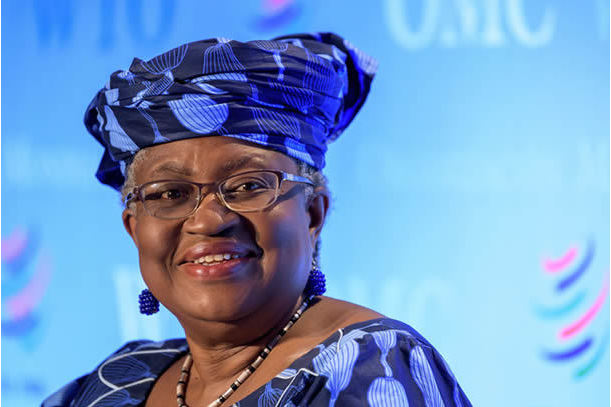
Ngozi Okonjo-Iweala: "Amid all the talk of decoupling and deglobalization, governments have renewed faith in the ability of multilateral rules to continue anchoring trade between countries and blocs."
Summary: The agreements adopted at the World Trade Organization's recent ministerial conference lay a foundation for members to rebuild trust, reach further deals, and advance much-needed institutional reforms to keep the global trade body fit for purpose. The goal must be to continue delivering results for people around the world.
As a beautiful dawn crept over Lake Geneva on June 17, a remarkable thing happened at the World Trade Organization’s headquarters. After nearly six days of negotiations at the WTO’s 12th Ministerial Conference – culminating in a marathon 48 hours of non-stop talks – ministers and senior officials from the body’s 164 member states adopted a historic package of agreements. The multilateral deals – of a scale and scope that the WTO has not achieved since the mid-1990s – will help people, businesses, and the planet.
For example, ministers struck a compromise on a long-debated proposal to waive intellectual-property protections related to COVID-19 countermeasures. Current COVID-19 vaccine supplies remain heavily dependent on the four WTO members that together account for over 90% of exported doses. As the pandemic has shown, many import-dependent regions are vulnerable to export restrictions introduced by other countries in the face of domestic crises.
Governments at the centre of the negotiations believe that the outcome – which has been criticized by public-health activists for doing too little and by pharmaceutical firms for going too far – will contribute to ongoing efforts to deconcentrate and diversify vaccine manufacturing capacity. This is significant for the future resilience of global vaccine supplies. Ministers also pledged to keep cross-border trade in medical supplies and components open and transparent, which will help members to gain better access to products needed to fight this pandemic – and to prepare better for the next one.
Next, the new agreement on fisheries subsidies – finally concluded after nearly 21 years of negotiations – will curb the estimated $22 billion in annual government support that contributes to the depletion of marine resources. By banning subsidies that contribute to illegal, unreported, and unregulated fishing, as well as fishing in the high seas and in overfished stocks, the pact represents a major step forward in protecting ocean health. The agreement – the first in WTO history with a primarily environmental objective at its core – also launches a second wave of negotiations to enhance the new rules on sustainability, including by further disciplining support for overcapacity and overfishing.
With the world confronting the worst food-security crisis in decades, WTO members pledged to make trade in food and agricultural inputs more predictable, which will help to make prices less volatile. They adopted a long-standing proposal to help the World Food Programme by ensuring that national export restrictions do not bar the United Nations agency from accessing supplies for the humanitarian relief it provides to millions of people in regions hit by war and natural disasters. WFP Executive Director David Beasley tweeted that “this humanitarian exemption saves time, [money], and ensures critical relief reaches the most vulnerable.”
WTO members also preserved predictability in the global digital economy by extending a long-established moratorium on levying customs duties on cross-border electronic transmissions. The decision is good news for consumers of streamed movies and video games, and better news for the millions of small and medium-size firms that rely on digital services and markets.
In addition, WTO members initiated a process of institutional reform, acknowledging that the organization needs to update and improve the way it operates. They committed to making the WTO’s dispute-settlement system fully functional again within two years. And, importantly, they recognized the role that trade and the WTO can play in empowering women, expanding opportunities for micro, small, and medium-size enterprises, and achieving global environmental goals.
Following the conference, one headline proclaimed that “A New Dawn Breaks for the Global Trading Order.” But success was hardly foreordained. All but a few previous WTO ministerial meetings had delivered little or broke down in acrimony. Many observers saw little chance of anything different happening this time, particularly given the backdrop of rising geopolitical tensions and the war in Ukraine.
And yet, the consensus in Geneva was joined by every WTO member, including Ukraine, Russia, the United States, China, the European Union and its member states, Australia, Brazil, India, Pakistan, South Africa, and Caribbean and Pacific island states. This was multilateralism at its best. Members rose above bilateral tensions and chose to invest in the multilateral trading system that for decades has underpinned expanding global trade and prosperity.
The agreements have put the WTO back on track as a results-oriented organization. They demonstrate that multilateral negotiations – which until recently were increasingly described as moribund – can still deliver, provided members overcome decades of distrust and work together.
Amid all the talk of decoupling and deglobalization, governments have renewed faith in the ability of multilateral rules to continue anchoring trade between countries and blocs. That will make it possible to avoid the heavy costs of far-reaching economic fragmentation. Strategic rivalries will of course persist. But the kind of strategic cooperation across geopolitical fault lines that was evident in Geneva will be necessary, in trade and other domains, if we are to solve problems of the global commons, from climate change to pandemic preparedness.
The measures adopted by the 600-odd bleary-eyed delegates in the WTO’s main conference room lay a foundation for members to rebuild trust, reach further agreements, and advance much-needed institutional reforms to keep the organization fit for purpose. The goal must be to continue delivering results for people around the world. I am confident that this brick-by-brick approach will establish a solid foundation to support a reinvigorated WTO well into the future.
Ngozi Okonjo-Iweala, Director-General of the World Trade Organization, is a former managing director at the World Bank, finance minister of Nigeria, board chair of Gavi, the Vaccine Alliance, and African Union special envoy on COVID-19. She is a distinguished fellow at the Brookings Institution and a Global Public Leader at Harvard University's John F. Kennedy School of Government.
Other Features
-
-
Repositioning BDCs through controlled participation in Nigeria’s ...
The new CBN directive embeds demand within a controlled structure that aims to increase transparency, improve price ...
-
Exploring the different types of online loans: Which one fits your ...
A quick loan is designed for fast approval and minimal paperwork.
-
Implications of SEC’s revised minimum capital requirements for ...
Capital Market Operators should ensure that they implement robust controls to ensure that any funds introduced in the ...
-
Building health systems for Africa’s vaccine sovereignty
The imperatives of reducing risk, strengthening markets, securing health futures
-
Analysis of CBN’s new regulations on cash management and dual ...
By revising cash policies and mandating dual connectivity for payment terminals, the Central Bank of Nigeria seeks to ...
-
Africa’s crypto investment market: where growth may emerge next
Africa’s crypto investment market: where the next growth coould explode.
-
Lessons from the 2025 Goalkeepers Report: What kind of innovation ...
The 2025 report issues a clear call to action for policymakers and engaged citizens.
-
Profit: The most powerful engine for scaling impact, dignity, and ...
The most prosperous countries in the world are not those with the most aid programmes. They are those with the most ...


Most Popular News
- Artificial intelligence can help to reduce youth unemployment in Africa – ...
- Despite AGOA extension uncertainty clouds US-Africa trade future - Xinhua
- MSC signs concession agreement to build new Lagos port
- Oil futures surge again following Trump's manoeuvre to cap prices
- NDIC pledges support towards financial system stability
- Mobile money transaction value reaches $2 trillion – GSMA report
Quick Search for Upcoming Events
Event Categories