Informal retailers in Nigeria: An untapped mine of opportunity?
Feature Highlight
Despite the economic recession, the Global Retail Development Index says Nigeria’s retail sector made a national sale of N38 trillion ($125bn) in 2016, the highest retail sales in Sub-Saharan Africa in that year.
For a long time now, there has been growing interest in Nigeria as the fasting growing African nation. Lagos state alone is now the sixth (6th) largest economy in Africa worth $131 billion GDP and third (3rd) largest mega city in the world behind Mumbai and Tokyo. The pace of this growth has been astonishing and mirrors the growth of the country itself, with the Nigerian GDP rocketing from $166 billion in 2006 to $296 billion in 2017; making up around 20% of the GDP for the entire African content. This growth is despite a fall in GDP over the past couple years due to the severe drop in crude oil prices.
The figures speak for themselves. There is no question about the wealth of opportunities for growth and investment in the Nigerian economy; it is more a question of which sectors to invest in. Nigeria has a thriving telecoms industry and government is working hard to support areas such as manufacturing and infrastructure; however one sector of particular interest is retail.
With a middle class that accounts for approximately 23% of the population and is estimated to have a combined buying power in excess of $28 billion, as well as more and more large brands entering the Sub-Saharan market through Nigeria (UK Toy shop Hamleys being one example), the retail market has made significant leaps and is still growing; fast. Despite the economic recession, the Global Retail Development Index says Nigeria’s retail sector made a national sale of N38 trillion ($125bn) in 2016, the highest retail sales in Sub-Saharan Africa in that year.
Formal retailers are gaining ground in the Nigerian market through foreign investors, such as the South African big-box chains Shoprite and Game. The number of malls in Lagos has also increased over the past 12 years since the opening of the first-ever Nigerian Mall, Palms Shopping Centre, in 2005.
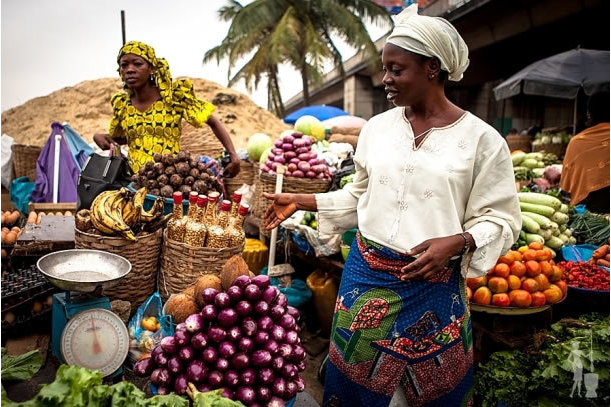
However, it is important to realize that 95% of the retail market is still informal, and this section of the market purchases and sells more homeware and giftware items than all the big retailers combined, an estimated N1 billion each day.
Both these informal and formal retailers are seeing a marked increase in demand for international products from consumers that have increased buying power and want international brands, thanks to internet and social media awareness. A large chunk of the sector, around 40% of these, do not currently travel to attend any large international retail fairs, leaving companies from Countries such as China, India, Turley, Indonesia, Japan, Italy and Taiwan with no alternative but to start penetrating the market at a local level by sending reps to meet directly with this massive number of buyers.
In response to this increase in demand and the untapped opportunities of the informal segment of the market, the Retail Council of Nigeria (RCN), National Association of Market Women and Men of Nigeria (Informal retailers association) and Government agencies have teamed up with a local exhibitions organiser with international reach (Clarion Events West Africa) to organise the home décor and giftware Nigeria expo.
“The formal retail market has witnessed unprecedented growth in recent years largely owing to the injection of international brands from Countries such as China, India, Italy and UK into the Nigerian market. RCN Members are eager to make new connections with international manufacturers and network with stakeholders from both the formal and informal market”, Asiwaju Solomon Kayode Onafowokan, President, Retail Council of Nigeria, Chairman, Chellarams plc and Past President, Lagos Chamber of Commerce and Industry (LCCI).
The exhibition, set to hold from 14 – 16 November, 2017 in Lagos, Nigeria has already gained international support with confirmed Country Pavilions from South Africa, Turkey and India. Over 4000 informal and formal retailers are expected to attend to meet with 100+ international and local suppliers and distributors of homeware, furnishing, interior décor, textile and gift items.
Victoria Smart is Marketing Manager, Clarion Events West Africa
Other Features
-
Monica Cash gains ground as best crypto platform as Bitcoin to ...
Monica Cash gains ground as best crypto platform as Bitcoin to Naira transactions rise across Nigeria.
-
Where do jobs really come from: A short note
Jobs are not created for their own sake; they emerge when people perform tasks that create value others are willing ...
-
Driving Africa’s fair energy transition through technology and ...
Bart Nnaji canvases decentralised approaches as essential to Africa’s path towards universal energy access.
-
Africa is not poor. It is illiquid
Charles Awanda poignantly describes Africa as a continent trapped between abundance and paralysis, and where wealth ...
-
When infrastructure becomes a bottleneck: Why we need to invest in ...
To succeed, entrepreneurs must become ecosystem innovators, building not only their products or services, but also ...
-
How Much Is a $100 Apple Gift Card in Naira: Best Rates
Find out how much a $100 Apple gift card is worth in Naira and where Nigerians are getting the best rates today.
-
Bridging the CPI gap: What Nigerian investors actually earned ...
Whether the NBS eventually publishes its own chain-linked series or the market continues to rely on independent ...
-
-
Repositioning BDCs through controlled participation in Nigeria’s ...
The new CBN directive embeds demand within a controlled structure that aims to increase transparency, improve price ...


Most Popular News
- Elon Musk’s SpaceX plans biggest IPO in history to shake Wall Street
- Nigeria to be among world’s top 10 economies by 2050
- Artificial intelligence can help to reduce youth unemployment in Africa – ...
- Covenant University and Unilag students win Andela-sponsored hackathon
- Nigeria ranks as world's second-largest bitcoin trader after the US
- Mara Group launches first made-in-Africa smartphones
Quick Search for Upcoming Events
Event Categories