Latest News
Global gas flaring hits six-year high as wasted gas reaches $54 billion

News Highlight
The volume of gas flared in 2025 exceeded the amount of liquefied natural gas that transited the Persian Gulf that year and was roughly equal to Africa’s annual gas consumption.
Global gas flaring rose for the third consecutive year in 2025, reaching 167 billion cubic metres, the highest level since 2019, according to the World Bank’s latest Global Gas Flaring Tracker.
The report, published by the World Bank’s Global Flaring and Methane Reduction Partnership in collaboration with the Payne Institute at the Colorado School of Mines, said the gas burnt off last year was worth an estimated $54 billion and could have been used to power homes, support industries, create jobs and expand access to cleaner fuels.
The volume of gas flared in 2025 exceeded the amount of liquefied natural gas (LNG) that transited the Persian Gulf that year and was roughly equal to Africa’s annual gas consumption, underscoring what the report described as a major missed opportunity for countries facing power shortages and high energy import bills.
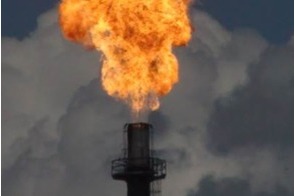
Gas flaring occurs when natural gas produced alongside oil is burned at production sites instead of being captured, processed and sold or used locally. The practice wastes a valuable energy resource and adds to greenhouse gas emissions.
The World Bank said the scale of flaring is especially costly for developing economies, where reliable energy remains central to growth. In Sub-Saharan Africa, power outages have been associated with a 14 per cent reduction in employment, highlighting the link between electricity access and job creation.
If captured and used to generate power, the 167 billion cubic metres of gas flared globally could provide approximately four billion kilowatt-hours of electricity, the report said, enough to make a meaningful difference in underserved communities.
The report argued that reducing flaring offers oil-producing developing countries a “win-win” opportunity: higher public revenue, stronger domestic energy security, expanded industrial activity and fewer emissions.
Eliminating routine flaring worldwide would require an estimated $70 billion to $100 billion in upfront investment, according to the report. That is roughly twice the annual value of the gas currently being wasted, suggesting that the economics of action are increasingly hard to ignore.
The World Bank said the problem is not a lack of technology. The systems needed to capture, process and use associated gas are already mature and widely available. Instead, the report pointed to weak regulation, limited gas infrastructure, insufficient access to capital and underdeveloped domestic gas markets as the main obstacles.
Some countries have shown that rapid progress is possible. The United States recorded the largest absolute reduction in flaring in 2025, cutting volumes by 0.4 billion cubic metres, or 7 per cent, helped by the commissioning of the Matterhorn Express pipeline in the Permian Basin.
Kazakhstan has reduced flaring by 87 per cent since 2012, a decline the report linked to sustained regulatory pressure, government commitment and targeted infrastructure investment.
Those examples show that large oil-producing economies can cut flaring when political will, regulation and infrastructure investment align, the report said.
The 2026 edition also introduced an enhanced methodology, using data from three NOAA satellites and an improved flare location catalogue and calibration method developed with the Payne Institute. The changes are intended to improve the accuracy and completeness of global flare volume estimates.
With flaring rising even as many countries struggle to secure affordable and reliable energy, the report called for stronger leadership from governments, operators and investors to turn wasted gas into productive energy.
Related News
-
Lloyds Energy evaluates LNG investments in Africa, Asia
Recent market developments highlight strong investment activity in LNG regasification infrastructure, including new FSRU ...
-
Equatorial Guinea mandates Afreximbank as advisor on $4.5bn LNG project
The project is expected to receive 360 million standard cubic feet per day of feed gas and to produce approximately 7,055 tons ...
-
Global gas flaring falls to lowest level since 2010
Three countries – Nigeria, Mexico, and the United States – accounted for most of the decline in global gas flaring ...


Latest Blogs
- What the next WHO Director-General must learn from Nigeria’s health reforms
- China's industrial strategy and Nigeria's retail reckoning
- Lagos street begging bill and the limits of prohibition
- Nigeria's new 4-Ds foreign policy faces an old test
- Safe food requires shared responsibility, not shared excuses
Most Popular News
- Foreign investors continue to favour Nigerian debt over stocks
- Africa launches continental credit rating agency
- World Bank backs petrochemical growth over decarbonisation
- Oil futures surge amid fears of the Middle East conflict expanding
- Rising debt burden threatens development progress, UNCTAD warns
- France faces higher borrowing costs as government moves to rein in debt
Quick Search for Upcoming Events
Event Categories