Fintech: Capturing the benefits, avoiding the risks
Feature Highlight
Intermediaries, so common to financial services – such as banks, firms specialized in messaging services, and correspondent banks clearing and settling transactions across borders – will face significant competition.
When you send an email, it takes one click of the mouse to deliver a message next door or across the planet. Gone are the days of special airmail stationery and colourful stamps to send letters abroad.
International payments are different. Destination still matters. You might use cash to pay for a cup of tea at a local shop, but not to order tea leaves from distant Sri Lanka. Depending on the carrier, the tea leaves might arrive before the seller can access the payment.
All of this may soon change. In a few years, cross-border payments and transactions could become as simple as sending an email.
Financial technology, or Fintech, is already touching consumers and businesses everywhere, from a local merchant seeking a loan, to the family planning for retirement, to the foreign worker sending remittances home.
But can we harness the potential while preparing for the changes? That is the purpose of the paper published today (June 20, 2017) by IMF staff, Fintech and Financial Services: Initial Considerations.
The possibilities of Fintech
What is Fintech precisely? Put simply, it is the collection of new technologies whose applications may affect financial services, including artificial intelligence, big data, biometrics, and distributed ledger technologies such as blockchains.
While we encourage innovation, we also need to ensure new technologies do not become tools for fraud, money laundering and terrorist financing, and that they do not risk unsettling financial stability.
Although technological revolutions are unpredictable, there are steps we can take today to prepare.
The new IMF research looks at the potential impact of innovative technologies on the types of services that financial firms offer, on the structure and interaction among these firms, and on how regulators might respond.
As our paper shows, Fintech offers the promise of faster, cheaper, more transparent and more user-friendly financial services for millions around the world.
The possibilities are exciting.
• Artificial intelligence combined with big data could automate credit scoring, so that consumers and businesses pay more competitive interest rates on loans.
• “Smart contracts” could allow investors to sell certain assets when pre-defined market conditions are satisfied, enhancing market efficiency.
• Armed with mobile phones and distributed ledger technology, individuals around the world could pay each other for goods and services, bypassing banks. Ordering tea leaves from abroad might become as easy as paying for a cup of tea next door.
These opportunities are likely to reshape the financial landscape to some degree but will also bring risks.
Intermediaries, so common to financial services – such as banks, firms specialized in messaging services, and correspondent banks clearing and settling transactions across borders – will face significant competition.
New technologies such as identity and account verification could lower transaction costs and make more information available on counterparties, making middlemen less relevant. Existing intermediaries may be pushed to specialize and outsource well-defined tasks to technology companies, possibly including customer due-diligence.
But we cannot ignore the potential advances in technology that might compromise consumer identities, or create new sources of instability in financial markets as services become increasingly automated.
Rules that will work effectively in this new environment might not look like today's rules. So, our challenge is clear – how can we effectively build new regulations for a new system?
Regulating without stifling innovation
First, oversight needs to be reimagined. Regulators now focus largely on well-defined entities, such as banks, insurance companies and brokerage firms. They may have to complement this focus with more attention on specific services, regardless of which market participants offer them. Rules would be needed to ensure sufficient consumer safeguards, including privacy protection, and to guard against money laundering and terrorist financing.
Second, international cooperation will be critical, because advances in technology know no borders, and it will be important to keep networks from moving to less regulated jurisdictions. New rules will need to clarify the legal status and ownership of digital tokens and assets.
Finally, regulation should continue to function as an essential safeguard to build trust in the stability and security of the networks and algorithms.
The launch of our paper today is one of the steps in the process of preparing for this new digital revolution. As an organization with a fully global membership, the IMF is uniquely positioned to serve as a platform for discussions among the private and public sectors on the rapidly evolving topic of Fintech.
As our research shows, adapting is not only possible, but it is the only way to ensure that the promise of Fintech is enjoyed by everybody.
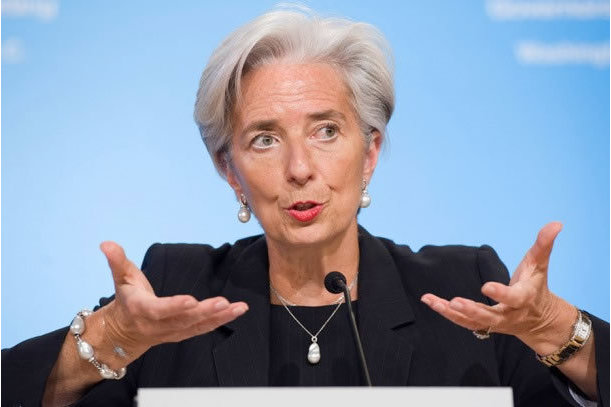
Christine Lagarde is the Managing Director of the International Monetary Fund.
Source: IMFBlog
Other Features
-
-
Repositioning BDCs through controlled participation in Nigeria’s ...
The new CBN directive embeds demand within a controlled structure that aims to increase transparency, improve price ...
-
Exploring the different types of online loans: Which one fits your ...
A quick loan is designed for fast approval and minimal paperwork.
-
Implications of SEC’s revised minimum capital requirements for ...
Capital Market Operators should ensure that they implement robust controls to ensure that any funds introduced in the ...
-
Building health systems for Africa’s vaccine sovereignty
The imperatives of reducing risk, strengthening markets, securing health futures
-
Analysis of CBN’s new regulations on cash management and dual ...
By revising cash policies and mandating dual connectivity for payment terminals, the Central Bank of Nigeria seeks to ...
-
Africa’s crypto investment market: where growth may emerge next
Africa’s crypto investment market: where the next growth coould explode.
-
Lessons from the 2025 Goalkeepers Report: What kind of innovation ...
The 2025 report issues a clear call to action for policymakers and engaged citizens.
-
Profit: The most powerful engine for scaling impact, dignity, and ...
The most prosperous countries in the world are not those with the most aid programmes. They are those with the most ...


Most Popular News
- Artificial intelligence can help to reduce youth unemployment in Africa – ...
- Mobile money transaction value reaches $2 trillion – GSMA report
- Dollar holds steady amid ongoing uncertainty in the Middle East
- Oil futures surge again following Trump's manoeuvre to cap prices
- Despite AGOA extension uncertainty clouds US-Africa trade future - Xinhua
- MSC signs concession agreement to build new Lagos port
Quick Search for Upcoming Events
Event Categories