Ending the war of attrition in Ukraine
Feature Highlight
The adverse economic fallout from the war and sanctions regime will also reach dire proportions in dozens of developing countries that depend on food and energy imports.
Summary: Vladimir Putin’s invasion of Ukraine has degenerated into a savage war of attrition that each side believes it will win, but which in reality both sides will lose. Ukraine should intensify the search for a negotiated peace of the kind that was on the table in March, but which was abandoned following the Russian atrocities in Bucha.
Wars often erupt and persist because of the two sides’ miscalculations regarding their relative power. In the case of Ukraine, Russia blundered badly by underestimating the resolve of Ukrainians to fight and the effectiveness of NATO-supplied weaponry. Yet Ukraine and NATO are also overestimating their capacity to defeat Russia on the battlefield. The result is a war of attrition that each side believes it will win, but that both sides will lose. Ukraine should intensify the search for a negotiated peace of the type that was on the table in late March, but which it then abandoned following evidence of Russian atrocities in Bucha – and perhaps owing to changing perceptions of its military prospects.
The peace terms under discussion in late March called for Ukraine’s neutrality, backed by security guarantees and a timeline to address contentious issues such as the status of Crimea and the Donbas. Russian and Ukrainian negotiators stated that there was progress in the negotiations, as did the Turkish mediators. The negotiations then collapsed after the reports from Bucha, with Ukraine’s negotiator stating that, “Ukrainian society is now much more negative about any negotiation concept that concerns the Russian Federation.”
But the case for negotiations remains urgent and overwhelming. The alternative is not Ukraine’s victory but a devastating war of attrition. To reach an agreement, both sides need to recalibrate their expectations.
When Russia attacked Ukraine, it clearly expected a quick and easy victory. Russia vastly underestimated the upgrading of the Ukraine military following years of US, British, and other military support and training since 2014. Moreover, Russia underestimated the extent to which NATO military technology would counter Russia’s greater number of troops. No doubt, Russia’s greatest error was to assume that the Ukrainians would not fight – or perhaps even switch sides.
Yet now Ukraine and its Western supporters are overestimating the chances of defeating Russia on the battlefield. The idea that the Russian army is about to collapse is wishful thinking. Russia has the military capacity to destroy Ukrainian infrastructure (such as the rail lines now under attack) and to win and hold territory in the Donbas region and on the Black Sea coast. Ukrainians are fighting resolutely, but it is highly unlikely that they can force a Russian defeat.
Nor can Western financial sanctions, which are far less sweeping and effective than the governments that imposed them acknowledge. US sanctions against Venezuela, Iran, North Korea, and others have not changed the politics of those regimes, and the sanctions against Russia are already falling far short of the hype with which they were introduced. Excluding Russian banks from the SWIFT international payments system was not the “nuclear option” that many claimed. According to the International Monetary Fund, Russia’s economy will contract by around 8.5% in 2022 – bad but hardly catastrophic.
Moreover, the sanctions are creating serious economic consequences for the United States and especially Europe. US inflation is at a 40-year high and is likely to persist because of the trillions of dollars of liquidity that had been created by the Federal Reserve in recent years. At the same time, the US and European economies are slowing, perhaps even contracting, as supply-chain disruptions proliferate.
US President Joe Biden’s domestic political position is weak and likely to weaken further as economic difficulties mount in the coming months. Public support for the war will also likely diminish as the economy sours. The Republican Party is split over the war, with the Trump faction not much interested in confronting Russia over Ukraine. The Democrats, too, will increasingly resent the stagflation that is likely to cost the party its majority in one or both houses of Congress in the November midterm elections.
The adverse economic fallout from the war and sanctions regime will also reach dire proportions in dozens of developing countries that depend on food and energy imports. Economic dislocations in these countries will lead to urgent calls worldwide to end the war and sanctions regime.
In the meantime, Ukraine continues to suffer grievously in terms of deaths, dislocation, and destruction. The IMF now forecasts a 35% contraction of Ukraine’s economy in 2022, reflecting the brutal destruction of housing, factories, rail stock, energy storage and transmission capacity, and other vital infrastructure.
Most dangerous of all, as long as the war continues, the risk of nuclear escalation is real. If Russia’s conventional forces were actually to be pushed toward defeat, as the US is now seeking, Russia might well counter with tactical nuclear weapons. A US or Russian aircraft could be shot down by the other side as they scramble over the Black Sea, which in turn could lead to direct military conflict. Media reports that the US has covert forces on the ground, and the US intelligence community’s disclosure that it helped Ukraine kill Russian generals and sink Russia’s Black Sea flagship, underscore the danger.
The reality of the nuclear threat means that both sides should never forgo the possibility of negotiations. That is the central lesson of the Cuban Missile Crisis, which took place 60 years ago this coming October. President John F. Kennedy saved the world then by negotiating an end to the crisis – agreeing that the US would never again invade Cuba and that the US would remove its missiles from Turkey in exchange for the withdrawal of the Soviet missiles from Cuba. That was not giving in to Soviet nuclear blackmail. That was Kennedy wisely avoiding Armageddon.
It is still possible to establish peace in Ukraine based on the parameters that were on the table at the end of March: neutrality, security guarantees, a framework for addressing Crimea and the Donbas, and Russian withdrawal. This remains the only realistic and safe course for Ukraine, Russia, and the world. The world would rally to such an agreement, and, for its own survival and well-being, so should Ukraine.
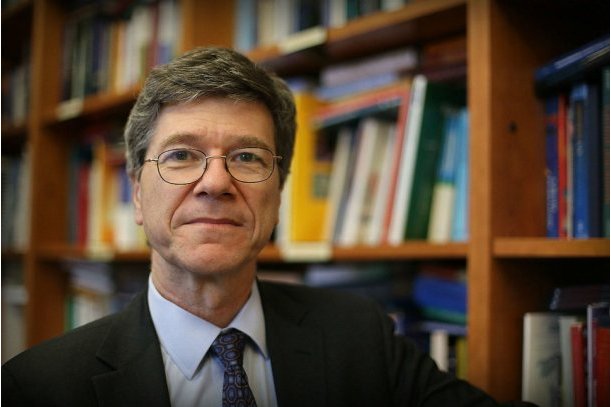
Jeffrey D. Sachs, University Professor at Columbia University, is Director of the Center for Sustainable Development at Columbia University and President of the UN Sustainable Development Solutions Network. He has served as adviser to three UN Secretaries-General, and currently serves as an SDG Advocate under Secretary-General António Guterres. His books include The End of Poverty, Common Wealth, The Age of Sustainable Development, Building the New American Economy, A New Foreign Policy: Beyond American Exceptionalism, and, most recently, The Ages of Globalization. Copyright: Project Syndicate.
Other Features
-
Beyond the Dangote IPO: What happens when the promise is tested
Every investor weighing the Dangote offer is making a judgement about the future, knowing there are no guarantees.
-
-
Analysis of Nigeria’s new virtual asset taxation framework
The framework is technically rigorous and sound, but its success will depend heavily on administrative capacity and ...
-
No free ride: Uber’s African retreat
Nigeria hardly offered Uber a competition-free road. Uber was not even the country’s first ride-hailing ...
-
What will determine the next gold price movements
Gold still has strong bullish fundamentals over the medium term. However, the path toward higher levels is unlikely ...
-
What would make Sidi Ould Tah smile?
After a year in office, Sidi Ould Tah has begun to reshape how the African Development Bank raises money and prepares ...
-
Nigeria’s Paris Club debt deal: A factual rejoinder to Donald Duke
Obasanjo’s credit was never in danger and did not require Duke to vandalise everyone else’s contribution.
-
Where to sell Steam gift cards in Nigeria: Rates, apps and how to ...
See where to sell Steam gift cards in Nigeria, current 2026 Steam card rates, and how to get paid on ...
-
Nigeria is building a sustainable health financing future
Gavi’s US$500 million support will help protect Nigeria’s children over the next five years while ...


Most Popular News
- BoE rate hold draws criticism as inflation climbs above 3 per cent
- Dangote Refinery posts $1.82 billion profit ahead of landmark IPO
- ECA, DHL join forces to boost African SMEs' cross-border trade
- Nigeria returns to J.P. Morgan bond index after more than a decade
- GSMA warns soaring smartphone costs could create a global AI divide
- World Bank mobilises $112bn in private capital for developing countries
Quick Search for Upcoming Events