Latest News
Global e-waste surging, up 21 per cent in 5 years
News Highlight
The findings of this year's UNU-affiliated Global E-waste Monitor suggest that humanity is not sufficiently implementing the SDGs - David M. Malone.
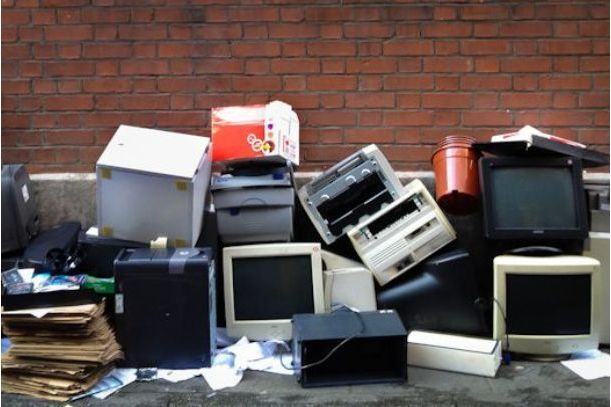
A record 53.6 million metric tonnes (Mt) of electronic waste was generated worldwide in 2019, up 21 per cent in just five years, according to the UN’s Global E-waste Monitor 2020. The new report predicts global e-waste -- discarded products with a battery or plug -- will reach 74 Mt by 2030, nearly doubling the volume of e-waste in just 16 years.
The report identifies e-waste as the world’s fastest-growing domestic waste stream, fuelled mainly by higher consumption rates of electric and electronic equipment, short life cycles, and few options for repair.
Only 17.4 per cent of 2019’s e-waste was collected and recycled. This means that gold, silver, copper, platinum and other high-value, recoverable materials conservatively valued at US $57 billion -- a sum greater than the gross domestic product of most countries – were mostly dumped or burned rather than being collected for treatment and reuse.
According to the report, Asia generated the greatest volume of e-waste in 2019 — some 24.9 Mt, followed by the Americas (13.1 Mt) and Europe (12 Mt), while Africa and Oceania generated 2.9 Mt and 0.7 Mt respectively.
For perspective, last year’s e-waste weighed substantially more than all the adults in Europe, or as much as 350 cruise ships the size of the Queen Mary 2, enough to form a line 125 km long.
E-waste is a health and environmental hazard, containing toxic additives or hazardous substances such as mercury, which damages the human brain and / or coordination system.
Other key findings from the Global E-waste Monitor 2020 say proper e-waste management can help mitigate global warming. In 2019, an estimated 98 Mt of CO2-equivalents were released into the atmosphere from discarded fridges and air-conditioners, contributing roughly 0.3 per cent of global greenhouse gas emissions. Also, in per capita terms, last year’s discarded e-waste averaged 7.3 kg for every man, woman and child on Earth.
Europe ranked first worldwide in terms of e-waste generation per capita with 16.2 kg per capita. Oceania came second (16.1 kg) followed by the Americas (13.3 kg). Asia and Africa were much lower: 5.6 and 2.5 kg respectively.
“The findings of this year's UNU-affiliated Global E-waste Monitor suggest that humanity is not sufficiently implementing the SDGs,” said David M. Malone, Rector, United Nations University (UNU) & UN Under Secretary General. “Substantially greater efforts are urgently required to ensure smarter and more sustainable global production, consumption, and disposal of electrical and electronic equipment. This report contributes mightily to the sense of urgency in turning around this dangerous global pattern.”
Related News
-
CEO using the same computer for over 10 years to save the planet
“It was my ambition when I got the notebook ten years ago to keep it for many years,” Sören Enholm, CEO of TCO ...

Latest Blogs
- Securing Nigeria’s economic future by making schools safe
- Nigeria at the precipice of a Hobbesian state
- Nigerian ethnoreligious prejudice vs South African xenophobia
- Fear and hope of state police in Nigeria
- The case for sustainability in a retreating world
Most Popular News
- Nigeria’s stock market delivers world’s best returns year to date
- ETF inflows offer Bitcoin relief amid institutional sales and policy risks
- Afreximbank partners One Street Studios to drive $1 billion film fund
- Global bank valuations surge in Q2 2026, Europe leads gains
- Uber’s losses since 2014 near $26 billion
- Nigeria exposed as global bodies warn of Middle East war risks
Quick Search for Upcoming Events
Event Categories