Getting to the heart of “No-Deal”
Feature Highlight
Most UK-based companies think they have already factored in Brexit for the short-medium term. But they have, in the most part, seriously underestimated a "No-Deal Outcome" and the very fact that they retain operations in the sinking ship that is Britain remains more an act of faith than judgement.
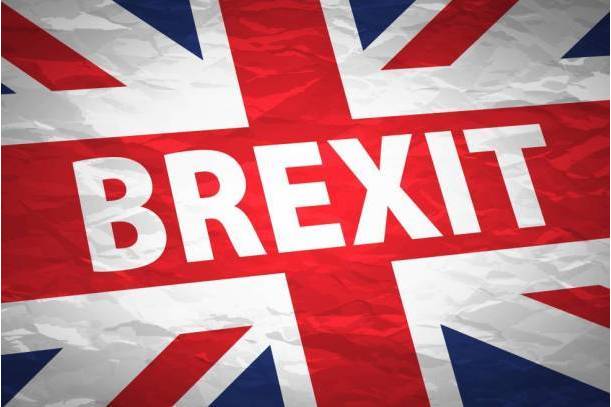
The terms "No-Deal Brexit" has been used so much over the last year that we have all become immune to its real meaning. It sounds like some political slang expression that has no relevance for the rest of us. Just one of the many options which will see the UK give up its membership of the European Union. Certainly, for sure... no "Big Deal".
But it is something so vastly more important and deservedly frightening than we could ever imagine. Brexit itself is a "Big Deal" as it cuts off the UK from the majority of its export customers. But a "No-Deal" is an exponentially greater tragedy, as it alienates all our trading partners and puts at risk Britain's place in the world. It makes the UK appear irresponsible, disorganised, almost comic and not a nation to trust. Any vestige of respect in the international community has gone. It is a nation already in decline, moving ever downwards to join the ranks of Venezuela, Moldova and Greece.
Then we come to the shameful statistics. So far, Brexit has led to the loss of a quarter of a million UK jobs and the transfer by banks of over one trillion euros to the European continent - and we have not even reached the final Brexit deadline yet. That is not counting in all the jobs and wealth that would have been formed if Brexit had never happened. Overall, at least a million UK and Irish jobs are at risk over the year following October 31st.
Most UK-based companies think they have already factored in Brexit for the short-medium term. But they have, in the most part, seriously underestimated a "No-Deal Outcome" and the very fact that they retain operations in the sinking ship that is Britain remains more an act of faith than judgement. It is, however, too late to look for alternatives.
Being inside the EU is now going to be an even greater advantage than in 2016 when the advantages still easily outweighed the disadvantages. In the last three years, huge trade deals have come to fruition - between the EU and Canada, Japan, Mexico, Singapore, Vietnam and recently the main south American economies. Agreements with Australia and New Zealand are currently underway. All the UK has in prospect is a botched deal with the USA that will leave it economically as little more than a Puerto Rico, just a poor satellite state.
Backlash
The Brexit vote was largely about immigration from the European Union. As the economy contracts and more people lose their jobs the blame for the economic collapse will again be placed on foreigners who are seen to have taken UK jobs. This is happening in the USA without the help of Brexit, thanks to a form of state-induced xenophobia. A similar pattern will emerge in the UK and employers will need to find ways to contain it - especially where it erupts into threats and violence against ethnic and national minorities.
According to Robin Chater, Secretary-General of the Federation of International Employers (FedEE), who is himself a British citizen, "Many people ask me how will it be possible to recognise on the ground that a No-Deal Brexit is affecting not only the economy, but UK society in general? In fact, it is already happening and the isolationism that comes as a consequence of such a savage rupture from the European continent will just speed up current trends. This will be seen on the surface in the more rapid spread of "chav" culture and millennials' inarticulate use of language (constant use of "like"), the breakdown of language itself ("I was sat down") and growth of entitlement attitudes. At a more fundamental level it will be seen in a greater incidence of violent crime (now very evident in the sharp rise of knife crime), more frequent incidents of racial abuse, rising absenteeism and falling levels of productivity.”
“At least the British people will be able to enjoy the satisfaction that they have done such a crazy thing all by themselves. The very epitome of free will. Well done."
The Federation of International Employers (FedEE) is a leading organisation for multinational companies. It was founded in 1988 with financial assistance from the European Commission. Today it is an independent body with corporate members all around the globe.
Other Features
-
Beyond the Dangote IPO: What happens when the promise is tested
Every investor weighing the Dangote offer is making a judgement about the future, knowing there are no guarantees.
-
-
Analysis of Nigeria’s new virtual asset taxation framework
The framework is technically rigorous and sound, but its success will depend heavily on administrative capacity and ...
-
No free ride: Uber’s African retreat
Nigeria hardly offered Uber a competition-free road. Uber was not even the country’s first ride-hailing ...
-
What will determine the next gold price movements
Gold still has strong bullish fundamentals over the medium term. However, the path toward higher levels is unlikely ...
-
What would make Sidi Ould Tah smile?
After a year in office, Sidi Ould Tah has begun to reshape how the African Development Bank raises money and prepares ...
-
Nigeria’s Paris Club debt deal: A factual rejoinder to Donald Duke
Obasanjo’s credit was never in danger and did not require Duke to vandalise everyone else’s contribution.
-
Where to sell Steam gift cards in Nigeria: Rates, apps and how to ...
See where to sell Steam gift cards in Nigeria, current 2026 Steam card rates, and how to get paid on ...
-
Nigeria is building a sustainable health financing future
Gavi’s US$500 million support will help protect Nigeria’s children over the next five years while ...


Most Popular News
- CBN cuts interest rate to 23 per cent in surprise shift towards growth
- Oil falls below $100 on hopes of swift Saudi supply recovery
- Guterres renews call for polluters to pay
- WIOCC secures new investors for Africa infrastructure expansion
- AFC backs N729bn bond issuance under Nigeria's power sector reforms
- Afreximbank signs $500m facility with ATDC to boost intra-African trade
Quick Search for Upcoming Events