Where will the next $1bn of growth investment in Nigeria go?
Feature Highlight
As we swing into 2024, we expect international interest to become more broad-based, and to steer increasingly towards non-fintech opportunities.
Nigeria’s success is Africa’s success. It’s the continent’s largest economy, home to 3 of Africa’s 5 ‘unicorns’ (start-ups valued at over $1bn) and has the continent’s largest number of tech-driven companies. More recently, it has been nearly un-investable. $2.4bn of Nigerian start-up funding between January 2021 and mid last year has dried up; only 2 large rounds have happened since mid-2022 (TeamApt raising $50m and Yellow Card raising $40m). Economic uncertainty, rampant inflation, concerns about Nigeria’s managed exchange rate, and more recently political uncertainty have combined to force international growth capital to the side-lines, waiting for clarity on how Nigeria would provide a stable investment climate into which to invest significant capital.
A lot is at stake, for Africa as a whole
For the continent’s $5bn of start-up funding to multiply, its crucial Nigeria attracts the biggest share of that capital. There are dozens of high-quality Nigerian tech-enabled companies now reaching growth stage, where $30-100m of investment into each will make the difference between them scaling to continental leadership and those companies remaining local/regional players. More broadly, for Africa to attract India’s $21bn of annual growth capital, many of these Nigerian growth companies will need to multiply in size, and many currently have less than 12-18 months of cash, making delays incredibly expensive for the companies and their current investors.
In our view, many macro factors in Nigeria will begin to moderate as 2023 wears on. While the country’s problems cannot be fixed overnight, it only takes an improvement in direction, and steps that show clear intent, for Nigeria to become investable again. Meanwhile, the lack of widespread violence around the recent elections is a first signal that the country has a stable route forward. So, we can already begin to look forward to the next $1bn of capital fuelling the next stage of expansion for the country’s growth stage tech businesses.
Where will the next $1bn go?
Up to now the majority has been invested in fintech. However, we see the financial ‘rails’ as nowhere near being fully built out, and there remains significant untapped opportunity across the country. Also, fintech sectors such as SME financing, social commerce financing, and delivery, aggregation and financing of smallholder farmer output – all fintech sectors where money ‘touches’ the real economy – remain largely untapped. Mobile money is yet to be rolled out, with key telcos such as MTN now positioning themselves to be serious competitors to incumbent banks. Finally, services that ride on core financial rails, such as insurance and higher-yielding savings, are barely deployed at any scale in the country. For a $500bn economy, there remains huge opportunity in core fintech. In addition to leaders such as Flutterwave, Paystack, and Interswitch, we are seeing emerging growth companies such as Migo, Carbon, Nomba, and PiggyVest begin to scale to levels which naturally attract international investors who are not ‘required’ to invest in Africa, but rather are looking for a minimum scale irrespective of geography.
Beyond fintech, we see key mobility sectors as a large, and growing, recipient of where the next $1bn will be deployed. Nigeria has a poor infrastructure, virtually no rail transport, and deliveries around the country often take longer than shipping goods thousands of miles abroad. Companies like Max.ng are making huge strides in enabling new vehicles to be deployed in Nigeria and will also lead the way in eventual electric vehicle deployment. In addition, GIG, through its market leading logistics and mobility arms, is demonstrating best-practice in deploying technology to ensure social commerce deliveries and inter-city transport can occur far more efficiently, and far more profitably, than traditional operators. In long-haul transport, Kobo360 has graduated from a start-up to the largest technology-driven long-haul logistics company in the region. Finally, Autochek, founded by the team that built Cars45, has been expanding its vehicle marketplace and financing offerings across multiple markets, making the resale of vehicles in Nigeria tech-enabled for the first time.
Nigeria’s largest sector, largely untouched by technology to date, remains agriculture. We see prominent tech-enabled growth companies such as ThriveAgric and Releaf now achieve the scale necessary to attract supportive international capital. For example, Thrive, mainly financed through debt, has already built a loyal base of nearly half a million smallholder farmers who receive higher prices, and better services, than they could ever achieve selling their harvests to middlemen in the traditional way.
Another sector with huge potential is renewable energy, specifically solar. Already Daystar has been acquired by Shell, and StarSight has announced a major expansion combining with South Africa based SolarAfrica. There remain a host of players competing in both the residential market and the commercial market. Many of these players, including M-KOPA and d.Light, have also expanded to mobile phones, and will expand further to solar appliances as they fill out their offerings. With the oil price seemingly set to remain high, the economic rationale for accelerating solar deployments in Nigeria is more compelling now than ever before.
Finally, we see major opportunities in building out basic infrastructure required for a true internet economy. In terms of data centres, Kasi aspires to build one of Africa’s most modern data centre operations in Lagos. Actis-backed Rack Centre already operates Nigeria’s second largest data centre operation and aims to multiply revenues over the coming 2-3 years.
What do we expect to happen going forward?
Once the election uncertainty is behind us, and the new administration takes office in the coming weeks, we expect Nigeria’s invest-ability to improve steadily. By the second half of 2023, stronger growth companies with trimmed losses will begin to attract international capital. As we swing into 2024, we expect international interest to become more broad-based, and to steer increasingly towards non-fintech opportunities. We believe many of these non-financial growth companies will offer embedded finance in one way or another, even if they operate in logistics, mobility, education, or healthcare. Overall, we expect the second half of 2023 to already match Nigeria’s best six months in terms of attracting international capital, and 2024 to potentially see a record inflow of funds, attracted by the more stable environment and the sheer quality of local growth companies still facing wide open market opportunities.
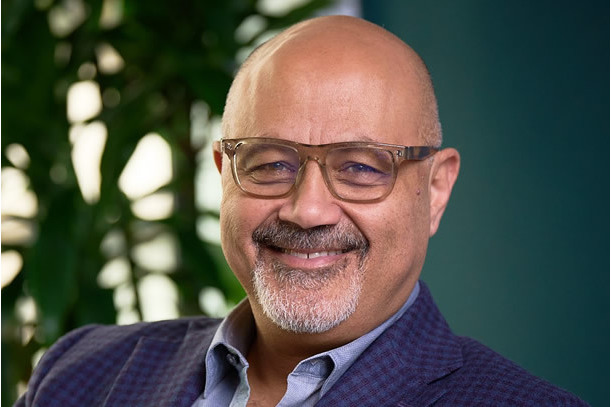
Victor Basta is CEO at DAI Magister.
Other Features
-
No free ride: Uber’s African retreat
Nigeria hardly offered Uber a competition-free road. Uber was not even the country’s first ride-hailing ...
-
What will determine the next gold price movements
Gold still has strong bullish fundamentals over the medium term. However, the path toward higher levels is unlikely ...
-
What would make Sidi Ould Tah smile?
After a year in office, Sidi Ould Tah has begun to reshape how the African Development Bank raises money and prepares ...
-
Nigeria’s Paris Club debt deal: A factual rejoinder to Donald Duke
Obasanjo’s credit was never in danger and did not require Duke to vandalise everyone else’s contribution.
-
Where to sell Steam gift cards in Nigeria: Rates, apps and how to ...
See where to sell Steam gift cards in Nigeria, current 2026 Steam card rates, and how to get paid on ...
-
Nigeria is building a sustainable health financing future
Gavi’s US$500 million support will help protect Nigeria’s children over the next five years while ...
-
An analysis of the Executive Order on Virtual Assets 2026
The new presidential executive order addresses a real problem – the cost and risk of regulators working in ...
-
Nigeria’s digital finance push needs a human override ledger
Nigeria should require that every consequential AI-enabled financial workflow maintain a human-override ledger.
-
Nigeria's maize waste could power a new renewable financing model ...
For a country still importing the bulk of its ideas on biomass financing from elsewhere, the data to build a ...


Most Popular News
- MTN engages global bond investors as IHS Towers acquisition nears
- Export development fund expands to Senegal and Liberia
- Uber leaves Nigeria and Uganda as part of wider global restructuring
- Oil prices stay elevated as Middle East tensions raise supply concerns
- Ghana offers sweeter terms to attract new oil investment
- South Korea, Africa to focus on AI and digital infrastructure at conference
Quick Search for Upcoming Events