
Structural and financing reform for Nigeria's education sector
Feature Highlight
Nigeria's education system has become less dynamic over the past years.
The “ten million-plus out-of-school children” is often an opener at discussions revolving around the state of the Nigerian education sector. In the last twelve months, I can count with relative ease the number of times this cliché has come up in varying degrees of relevance within different professional and social circles that I was a part of.
Much as I agree with the stark portrait such narrative paints of our current education system, the focus on numbers of enrolment and basic education robs us of a critical dialogue on how to overhaul our antiquated education system.
To be sure, education reform is a global agenda. Both developed and developing countries raptly discuss it at global fora. Unfortunately, the solutions are beyond the procurement of a universal reform template for implementation. Countries must review their internal systems in order to adopt solutions that align with their local situations.
Likewise, it is not sufficient to assume that learning crises are positively correlated to poor youth employment data or productivity, at least not in all cases. For instance, the learning and skills gaps that exist in the middle-age spectrum of labour supply could have significant negative impacts on productivity. Thus, this underlines the need for forward-looking labour supply policies.
For this reason, the learning and skill gaps must be analysed for each segment of the labour supply curve, and different strategies adopted e.g. for basic education, tertiary education and workplace up-skilling. Therefore, Nigeria must adopt the policy of life-long learning, which includes workplace skills development, in the formulation of a policy to revamp the education sector.
Over the years, Nigeria's education system has become less dynamic and hence the fixation on statistics such as the number of out-of-school children and the failure rates in secondary school certificate and matriculation examinations. The preoccupation with such statistics, however, does not factor statistics of our global workplace competitiveness and skills – which are also pretty much unfavourable, and can continue to widen the productivity gap.
The Nigerian education sector is overdue to have a major structural reform. Such reform would change the role of government in education, and promote a value chain approach to education and learning. There is also the need to adopt an innovative approach for meeting the challenge of financing our education system.
However, the larger problem of this sector is structural. Currently, government is playing the role of a regulator and provider of education and skills. This dual role has progressively become challenging as government financing in the sector is increasingly constrained by competing needs. The public sector can no longer effectively carry out both roles without compromising one or the two. In light of this, a system with clearer, distinct roles and responsibilities for the public, private and third sectors is envisaged. This tripartite solution would address the need for collaboration, greater efficiencies and accountability.
A major frontier of the needed structural reform must involve the unbundling of the sector, and creation of a value chain with increased private and local participation, in areas such as assessment, content (traditional and digital), and financing. The upswing in private learning institutions which started two decades ago has been a step forward in creating greater private sector involvement in the education sector. But other aspects of the value chain needs to be developed as well.
Government is unable, at least in the short- to medium-term, to perform the dual role of regulator and provider. The government should, therefore, focus more on policy, to entrench a robust framework for public-private initiatives, raise the standard of education, increase access and improve learning outcomes.
On the financing side, the focus of investment has been skewed in favour of tangible assets, notably buildings. There has been less emphasis on investment in key aspects such as science laboratories, libraries, up-to-date curricula and continuous training of teachers. While this is not exclusively explained by the limitation of funding, especially looking at the inclination of the public sector to want to provide hard evidence of performance, it is necessary to improve wider funding participation to broaden the solutions offered. Corporate Social Investors (CSIs) and Corporate Social Responsibility (CSR) can contribute more to the funding and project pools. Also, a fund like the Tertiary Education Trust Fund (TETFund) is a good model in building broad-based distribution of educational investment.
At the micro-level, innovative education financing solutions can be harnessed by encouraging startups and incubators who can provide student loans. The government would, however, have to act as a backstop for these loans or provide some sort of guarantee to financial intermediaries in providing such risk assets. The role of insurance policies should also be encouraged as a mechanism for sharing and mitigating risk.
The creation of a CSI/CSR fund that companies and individuals can contribute into and receive tax credits would engender far-reaching efficiency of scale than what obtains currently where each provider of CSI/CSR capital puts in place its own turnkey solution. Such solutions tend to lack specialized knowledge and cost-efficiency.
A PPP fund can run as a sub-fund under the TETFund model. The Federal Inland Revenue (FIRS), through the Joint Tax Board, (JTB) can also work in conjunction with the social protection programmes of the current administration to efficiently distribute e-vouchers to help finance the education system.
There is a funding gap for Senior Secondary School (SSS1-SSS3). The UBEC (Universal Basic Education Commission) funds cover basic education to Junior Secondary School (JSS3) level, while the TETFund covers tertiary education. It is about time we merged these funds and had one National Education Service or Support Fund that is run efficiently with regular allocation of funds as and where needed.
While solutions cannot be exhausted in one article, I decided to close with a low-hanging fruit that could improve learning outcomes and achieve one of the goals of the current government. In addition to government's plan to recruit 500,000 unemployed graduates and National Certificate of Education holders as teachers to enhance basic education especially in rural areas, early childhood education can also be improved by training 100 child-care attendants/minders using a structured curriculum in each of the 774 local government areas (this will give a total of 77,400 attendants). Each of these child-care attendants would then be given an incentive (like payment per child in their care) to start a child-care business within a local government area or a local school.
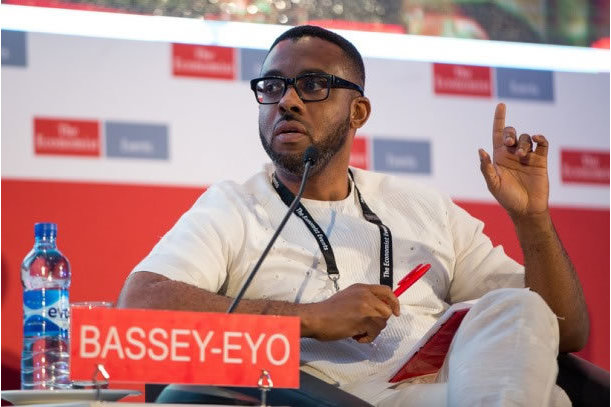
Ani C. Bassey-Eyo, CEO of LANI Group and co-founder of Axiom Learning Solutions (a company that has trained circa. 13,000 teachers since 2011 and provides integrated solutions within the education value chain). A chartered accountant and former international banker; Bassey-Eyo was a contributing author for the JP Morgan International Treasurers Handbook for several years. Follow him on Twitter at @ACB_NG
Other Features
-
-
Analysis of Nigeria’s new virtual asset taxation framework
The framework is technically rigorous and sound, but its success will depend heavily on administrative capacity and ...
-
No free ride: Uber’s African retreat
Nigeria hardly offered Uber a competition-free road. Uber was not even the country’s first ride-hailing ...
-
What will determine the next gold price movements
Gold still has strong bullish fundamentals over the medium term. However, the path toward higher levels is unlikely ...
-
What would make Sidi Ould Tah smile?
After a year in office, Sidi Ould Tah has begun to reshape how the African Development Bank raises money and prepares ...
-
Nigeria’s Paris Club debt deal: A factual rejoinder to Donald Duke
Obasanjo’s credit was never in danger and did not require Duke to vandalise everyone else’s contribution.
-
Where to sell Steam gift cards in Nigeria: Rates, apps and how to ...
See where to sell Steam gift cards in Nigeria, current 2026 Steam card rates, and how to get paid on ...
-
Nigeria is building a sustainable health financing future
Gavi’s US$500 million support will help protect Nigeria’s children over the next five years while ...
-
An analysis of the Executive Order on Virtual Assets 2026
The new presidential executive order addresses a real problem – the cost and risk of regulators working in ...


Most Popular News
- Dangote Refinery posts $1.82 billion profit ahead of landmark IPO
- BoE rate hold draws criticism as inflation climbs above 3 per cent
- Alliance to End Plastic Waste reports progress on circular economy
- AfDB approves $5.1 billion response to energy and fertiliser shocks
- Digital services boom widens global trade gap, UNCTAD says
- GSMA warns soaring smartphone costs could create a global AI divide
Quick Search for Upcoming Events