Latest News
Blue economy, coastal communities under threat from sea level rise – UN
News Highlight
The blue economy is estimated at $3-6 trillion a year, accounting for more than three quarters of world trade and providing livelihoods for more than six billion people.
The World Meteorological Organisation (WMO) has warned that oceans are facing an unprecedented level of threat due to global warming. According to an alert by the specialised agency of the United Nations on Monday, sea level rose by around 15 centimetres during the 20th century due to melting glaciers, the expansion of warmer sea waters and additions from former ice sheets in Greenland and Antarctica.
The UN weather experts said warmer seas helped to fuel a record Atlantic hurricane season in 2020, along with intense tropical cyclones in the Indian and South Pacific Oceans. The increase in the temperature of oceans is the result of climate change caused by human activities, specifically emissions of greenhouse gases (GHGs), like carbon dioxide (CO2) and methane.
Projections by the WMO show that sea level could further rise by 30-60 centimetres by 2100, even if GHG emissions are sharply reduced and global warming is limited to well below 2 degrees Celsius (°C). But if carbon emissions continue unabated, the increase will be between 60-110 centimetres by end of the century.
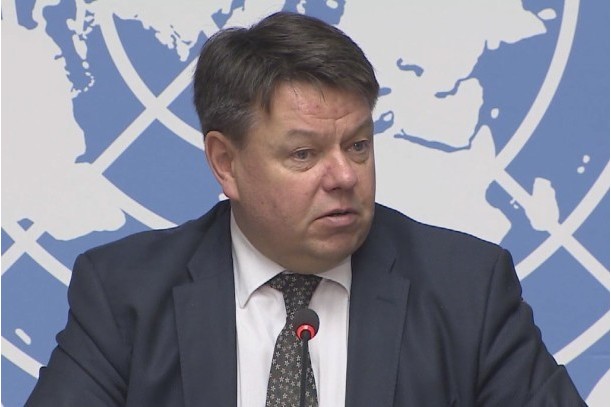
“About 40 per cent of the global population live within 100 kilometres of the coast, there is an urgent need to protect communities from coastal hazards, such as waves, storm surge and sea level rise” via “multi-hazard” warning systems and forecasting, said Petteri Taalas, WMO Secretary-General.
The agency's alert called for the protection of the "blue economy," which encompasses all economic activities related to oceans, seas and coasts, and entails sustainable use of ocean resources. According to the WMO, the blue economy is estimated at $3-6 trillion a year, accounting for more than three quarters of world trade and providing livelihoods for more than six billion people.
Global warming is causing changes in ocean chemistry, thereby disrupting marine ecosystems and people who depend on them. Millions of dollars in goods and hundreds of lives are still lost at sea each year due to extreme weather conditions such as high winds, large waves, fog, thunderstorms, sea ice and freezing spray, the WMO said.
The agency described the ocean as “the Earth’s thermostat,” absorbing and transforming a significant portion of the sun’s radiation and providing heat and water vapour to the atmosphere. It said if GHG emissions are not limited, the impact on oceans "will be felt for hundreds of years.”
The weather experts called for lifesaving monitoring and early warning services that were interrupted by the COVID-19 pandemic to be restored and ramped up to protect shipping and coastal communities at risk. Due to the COVID-19 crisis, governments and oceanographic institutions had recalled nearly all oceanographic research vessels home. The pandemic also reduced the capacity of commercial ships to contribute vital ocean and weather observations, the WMO said.
The agency highlighted the importance of 24/7 threat observation for the protection of lives and property, not only on land but also at sea. The WMO warning was released today ahead of the World Meteorological Day observed on March 23.
Related News
-
Nigeria draws $1.5bn from Abu Dhabi loan amid rising debt-service pressures
The deal highlights the country’s mounting debt-service challenge and its strategic pivot towards unconventional, complex ...
-
IMF warns of global public debt approaching 100 percent of GDP
Country-specific responses will be critical in maintaining stability and avoiding further deterioration in public finances, said ...
-
IMF projects global public debt to rise above 100 percent of GDP
A 2022 data by IMF showed the gross public debt of countries as a percentage of GDP. The US figure was 121.31%, China 76.98%, ...


Latest Blogs
- Nigeria’s job creation crisis story
- The FCCPC and the limits of competition law in Nigeria
- Securing Nigeria’s economic future by making schools safe
- Nigeria at the precipice of a Hobbesian state
- Nigerian ethnoreligious prejudice vs South African xenophobia
Most Popular News
- Nigeria’s stock market delivers world’s best returns year to date
- Cocoa value-addition push as new test for Nigeria’s industrial ambition
- Nigeria’s official inflation rate eases to 15.91 per cent
- Oando posts ₦204 billion profit as production surges
- Nigeria oil output hits six-year high, above OPEC's target
- Global bank valuations surge in Q2 2026, Europe leads gains
Quick Search for Upcoming Events
Event Categories