Africa's youth needs more than just technology
Feature Highlight
One of Africa's challenges is that the skills of the youth are not improving, compared to global standards.
We often read about the number of jobs that our youth are going to be doing in 10 or 15 years that don't even exist yet. The conventional wisdom is that we can prepare them for this "unknown future" by giving them access to technology, the Internet and the language they will need to talk to the machines.
But I'm not convinced that access to technology alone is the answer for our youth's hopes and aspirations. I think they want – and deserve – a whole lot more. I recently sat on a panel discussion at the launch of #sheinnovates, an initiative with UN Women to help empower women and girls across Africa to capitalise on the opportunities of the 21st century economy.
What I expected was a discussion around lofty issues like closing the STEM skills gap for the next wave of female tech leaders and entrepreneurs, and unlocking technology's capacity to drive social good across the continent. What I got was a wake-up call.
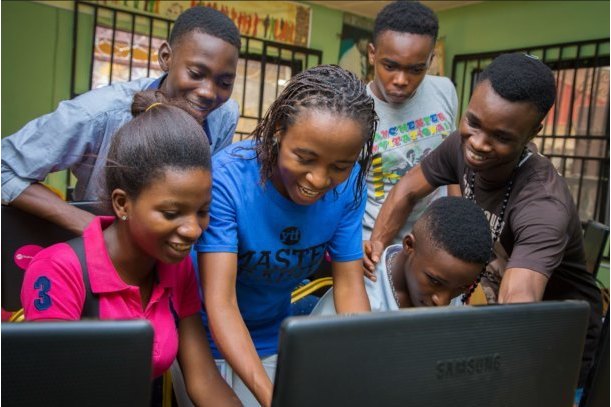
Listening to these young people, I came to a massive realisation. Yes, young people in Africa need access to the internet, and technology resources. But what they need more than that is guidance on how to take the first steps in this digital world. They don't just need opportunities: they need to know how to take the first steps to get there. They need role models. They need guidance. A framework. Safe spaces. For our youth, the biggest issue is not the technology, it's the content.
So how do we, as African business leaders and society, become relevant to our youth? What is corporate Africa doing about creating an environment for learning? Where are the role models in our communities – specifically, female role models?
One of Africa's challenges is that the skills of the youth are not improving, compared to global standards. This is in spite of the numerous programmes being run across the continent to raise tech skills. Part of the problem is that many of these initiatives are one-off events. What we really need is sustainable programmes, with measurable long-term goals.
As SAP, we're using initiatives like Africa Code Week to drive sustainable learning impact across Africa. We're not just instilling digital literacy and coding skills in the young generation. We're working with a range of partners and communities to build lasting community capacity and knowledge.
Our First Lego League doesn't just inspire children to become involved in programming and robotics. It teaches them valuable life lessons that will help in the digital world: how to research a community problem, and to solve it by working together to create a solution. It teaches core values like inclusion, teamwork, fun, making an impact, and learning to present in public. These aren't technology skills. They're life skills. And they're exactly what our youth is crying out for.
As corporate Africa, we need to create more long-term initiatives. These initiatives should be part of the company strategy, and not a CSR programme. Why? What we've found is that when a programme is viewed as CSR, it comes across as a "by the way" initiative, or a charitable handout. When it's related to the business, it's focused, driven and sustainable.
We've also got to get more creative in our youth-focused programmes. We need to tailor them to the unique personalities, challenges and even age groups of each group of kids. Creating a "sausage machine" isn't going to help anyone make their way in the bold new digital age we live in.
We have a real opportunity to seed the growth of our future citizens, who will play key roles in the economy, government and society. It is up to us to take it.
Cathy Smith, Managing Director at SAP Africa
Editor's Note
This article is published under the series Finance and Technology, a new platform of Financial Nigeria magazine, promoted by Simplex Business Solutions Limited. Knowledge leaders in the interception of finance and technology are welcome to contribute to the industry platform. Editorial contributions should be submitted to editor@financialnigeria.com.
Other Features
-
Africa is not poor. It is illiquid
Charles Awanda poignantly describes Africa as a continent trapped between abundance and paralysis, and where wealth ...
-
When infrastructure becomes a bottleneck: Why we need to invest in ...
To succeed, entrepreneurs must become ecosystem innovators, building not only their products or services, but also ...
-
How Much Is a $100 Apple Gift Card in Naira: Best Rates
Find out how much a $100 Apple gift card is worth in Naira and where Nigerians are getting the best rates today.
-
Bridging the CPI gap: What Nigerian investors actually earned ...
Whether the NBS eventually publishes its own chain-linked series or the market continues to rely on independent ...
-
-
Repositioning BDCs through controlled participation in Nigeria’s ...
The new CBN directive embeds demand within a controlled structure that aims to increase transparency, improve price ...
-
Exploring the different types of online loans: Which one fits your ...
A quick loan is designed for fast approval and minimal paperwork.
-
Implications of SEC’s revised minimum capital requirements for ...
Capital Market Operators should ensure that they implement robust controls to ensure that any funds introduced in the ...
-
Building health systems for Africa’s vaccine sovereignty
The imperatives of reducing risk, strengthening markets, securing health futures


Most Popular News
- Artificial intelligence can help to reduce youth unemployment in Africa – ...
- CBN, market dealers introduce overnight financing rate
- Workplace psychosocial risks cause 840,000 deaths a year - ILO
- UNCTAD partners Singapore for driving greener, more resilient ports
- Liquid Intelligent Technologies raises $660 million in debt financing
- Africa Finance Corporation secures $100mn from India Exim Bank
Quick Search for Upcoming Events
Event Categories