AfDB approves $77 million to boost Uganda’s agriculture sector
Summary
The financing is for the second phase of Uganda’s Farm Income Enhancement and Forestry Conservation Programme.
The African Development Bank (AfDB) has approved a $76.7 million loan to boost Uganda’s agricultural sector.
In a press statement released on Wednesday, AfDB said the financing is for the second phase of Uganda’s Farm Income Enhancement and Forestry Conservation Programme, which focuses on improving farm incomes, rural livelihoods, food security, climate resilience, sustainable natural resource management, and agricultural enterprise development. The first phase of the programme was completed in December 2012.
The AfDB programme is part of the bank’s Ten-Year Strategy (2013-2022) and High 5s for Uganda, which prioritizes agriculture and food security as key areas for future assistance. The total cost of the programme is estimated at $91.43 million – AfDB is providing $76.7 million, the Nordic Development Fund will provide $5.6 million, and the Ugandan government provides $9.13 million in counterpart funding.
The programme will be implemented over five years in five districts where irrigation schemes are located – Nebbi, Oyam, Butaleja, Kween, and Kasese. The districts have an estimated 1.8 million population, with 52 percent of them women. Outside irrigation command areas, the programme will also benefit 300,000 households, with women heading 20 percent of them.
In 2013, a Uganda National Household Survey reported that about 19.7 percent of the East African nation’s 38 million population were unable to meet their basic needs. The survey also stated that the incidence of poverty was highest among the food-crop growing category in the rural areas where incomes are low.
Chibuike Oguh is Financial Nigeria's Frontier Markets Analyst
Related
-
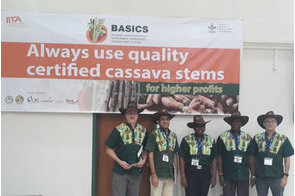
Bill & Melinda Gates Foundation supports high quality cassava seeds business in Nigeria
Researchers say the adoption of high-quality cassava stems for cultivation could raise productivity by at least 30%.
-
AfDB makes $9 million investment in Nigerian agribusiness vehicle
The fund is expected to deliver strong development outcomes including employment, women empowerment and inclusive growth.
-
Why contract farming is necessary in Nigeria
More food processing companies in Nigeria should be encouraged to enter into partnership agreements with smallholders.

Sustainable Development Section Sponsor
-
Access Bank Plc ...Financing the future

Most Popular