Populism for the rich
Feature Highlight
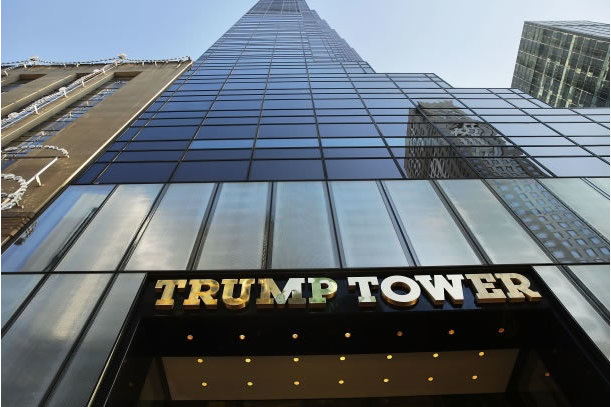
Trump, too, wants everything bearing his name to be bigger and shinier than everything else.
I recently joined a tour in Bucharest of the Palace of Parliament, the gigantic folly built in the 1980s on the orders of the late Romanian dictator Nicolae Ceauşescu, who was executed before he could see it finished. The statistics rehearsed by our guide were staggering: the third biggest edifice in the world, 220,000 square feet of carpet, one million cubic meters of marble, 3,500 tons of crystal. The enormous marble stairways had to be rebuilt several times to match exactly the steps of the dictator, who was a small man.
To construct this neoclassical monstrosity, an entire swath of the city, a beautiful area of eighteenth-century houses, churches, and synagogues, was razed, displacing 40,000 people. More than a million people worked on the project non-stop day and night. It pretty much bankrupted the state, even as Ceauşescu's subjects had to do without heat and electricity for much of the time. It still costs more than $6 million a year to maintain the palace, which now houses the Romanian parliament and an art museum, leaving 70% of the building unused.
Ceauşescu's folly is a monument to megalomania. But it is by no means unique, except in its size (though Turkish President Recep Tayyip Erdoğan has tried to rival it in scale with his new palace in Ankara). It is indeed remarkable how megalomaniacs of a certain kind think alike, or at least share a similar taste in architecture. Hitler's plans for the reconstruction of Berlin reflected the same neoclassical gigantism. And the interior of the palace in Bucharest, a kind of Louis XIV style on steroids, is just a more extravagant version of Donald Trump's living quarters in Florida and New York.
These places are what you get when socially insecure outsiders dream of being the Sun King. To mention Trump in the same breath as Hitler and Ceauşescu is perhaps unfair. Trump is not a murderous tyrant. And his social background is more complicated.
Hitler was the son of a minor customs official, and Ceauşescu was of poor peasant stock. Both men felt small and provincial in their capital cities. Their way of dominating the more sophisticated urban elites was to oppress them violently and rebuild the cities according to their own grandiose dreams.
Trump, too, wants everything bearing his name to be bigger and shinier than everything else. But he was born in New York and inherited a considerable amount of money from his father, Fred Trump, a real-estate developer with a somewhat shady reputation. And yet he, too, appears to seethe with resentment against the elites who might look down on him as an uncouth arriviste, with his absurd golden skyscrapers and rococo mansions full of gilded chairs and massive chandeliers.
Modern populism is often described as a new class war between the beneficiaries of a globalized world and those who feel left behind. Supporters of Trump in the United States and of Brexit in the United Kingdom are, on the whole, less educated than the “establishment” they oppose. But they could never have gotten as far as they have on their own. The Tea Party in the US would have been relatively marginal without powerful backers and demagogues. And these are often newly rich men who share their followers' bitterness.
This was clearly the case in Italy, where former Prime Minister Silvio Berlusconi, whose background is almost identical to Trump's, managed to tap into the dreams and resentments of millions of people. Populist movements in other countries show a similar pattern. In Thailand, the Sino-Thai business tycoon Thaksin Shinawatra, the son of a nouveau-riche father like Berlusconi and Trump, ran against Bangkok's social and political elites, becoming Prime Minister with the backing of provincial and rural voters, before being ousted in a military coup. In the Netherlands, a newly rich class of real-estate moguls backed the right-wing populist Pim Fortuyn and his cruder successor, Geert Wilders.
The newly rich are as important a force in the rise of populism as the poorer and less educated people who feel neglected by the elites. Despite huge inequalities of wealth, they share a deep anger at those whom they suspect of looking down on them. And they are not entirely wrong. No matter how many palaces or yachts new money can acquire, old money will continue to despise the acquirer. Likewise, the educated urban class tends to dismiss the voters who supported Brexit or back Trump as stupid and ill-bred.
It is the fusion of resentments, felt by the newly rich as much as by the left behind, that drives right-wing populism. In extreme circumstances, this can result in dictatorship, with the tyrant free to indulge bizarre fantasies at the expense of millions under their control.
So far, in Europe and the US, the demagogues can only serve up dreams: taking back our country, making it great again, and so on. To stop such dreams from becoming political nightmares, something more is needed than technocratic expertise, or calls for civility and moderation. Angry people cannot easily be persuaded by luminous reason. They must be offered an alternative vision.
The problem today, all over the world, is that such an alternative is not readily at hand. The French Revolution happened more than two centuries ago. “Liberty, Equality, and Fraternity” is only a historic slogan today. But this might be a good time to update it.
Ian Buruma is Professor of Democracy, Human Rights, and Journalism at Bard College.
Copyright: Project Syndicate
Other Features
-
Questioning the just war doctrine
In early June, Pope Leo XIV told a group of journalists, “The notion of a just war no longer applies."
-
Africa's creator economy has a payment problem worth billions
Receiving international earnings as an African creator involves a level of friction that would be considered ...
-
Understanding NOFR and its potential market impact
The introduction of the Nigerian Overnight Financing Rate represents a significant step towards modernising ...
-
How philanthropic capital can accelerate prosperity by investing ...
Philanthropy can accelerate prosperity by enabling asset ownership.
-
Nigeria and the $1.5 trillion global gift card market
Gift card-to-naira conversion gives holders flexibility in how they use their funds.
-
3 infrastructure gaps Nigerian lenders can’t afford to ignore
The lenders that lead over the next year will be those that treat credit not as an isolated transaction, but as a ...
-
Monica Cash gains ground as best crypto platform as Bitcoin to ...
Monica Cash gains ground as best crypto platform as Bitcoin to Naira transactions rise across Nigeria.
-
Where do jobs really come from: A short note
Jobs are not created for their own sake; they emerge when people perform tasks that create value others are willing ...
-
Driving Africa’s fair energy transition through technology and ...
Bart Nnaji canvases decentralised approaches as essential to Africa’s path towards universal energy access.


Most Popular News
- Nigeria’s stock market delivers world’s best returns year to date
- ETF inflows offer Bitcoin relief amid institutional sales and policy risks
- Afreximbank partners One Street Studios to drive $1 billion film fund
- Global bank valuations surge in Q2 2026, Europe leads gains
- Uber’s losses since 2014 near $26 billion
- Nigeria exposed as global bodies warn of Middle East war risks
Quick Search for Upcoming Events
Event Categories