Grading the big pandemic test
Feature Highlight
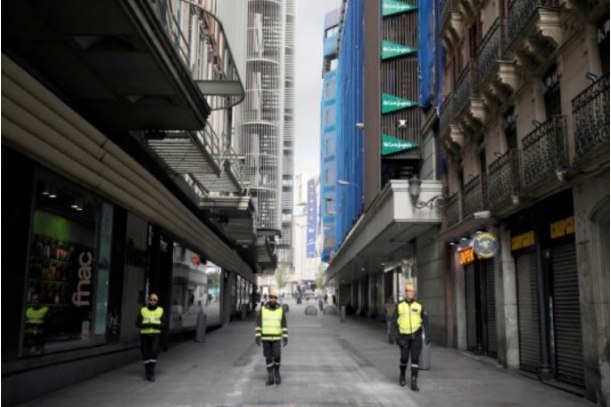
Europe does not seem to be paying a price for its decision to put health above economics.
From the moment COVID-19 emerged as a global threat, it was clear that it would test every society’s strength, resilience, and response capabilities. Almost one year on, it is time to assess who passed the test, and who failed.
From a public-health standpoint, the answer is clear: East Asia – including Australia and New Zealand – passed the test with flying colours. As for the rest, Europe performed unevenly, the United States stumbled badly, and developing countries have struggled.
To be sure, luck played more than its part in explaining initially uneven performance. In Europe, Italy and Spain were hit extremely hard by the first wave, because the then-unknown coronavirus took root, unnoticed, until it erupted in full force. By contrast, Germany and Poland saw it coming and could take effective measures in time.
But while governments can ascribe unequal death tolls during the first wave to luck, the argument does not hold for the second wave. Policymakers cannot eschew responsibility for the uncontrolled spread of the pandemic in the US or its resurgence in Europe.
Two trade-offs dominate discussions on the policy response. The first one, between disease control and individual rights, is hard to avoid. Contact tracing and mandatory isolation are effective in combating the spread of the virus, but infringe on civil liberties. China clearly stands apart for its disregard of individual freedom, but Western societies would also find it hard to accept the intrusive tracing measures taken in South Korea or Singapore. Like it or not, there is a price to pay for the freedom and privacy we cherish.
The second trade-off is not between saving lives and saving the economy. Rather, it involves a choice between being stringent today and being forced to be more stringent tomorrow. European societies went for strict lockdown measures in the spring, and then all but ended social distancing over the summer. By October, the only option left was to tighten the screws again. Australia made a different choice and moderately increased the stringency of its disease-containment measures throughout its winter season. It was able to relax these controls just when European countries had to strengthen theirs.
In a recent commentary, the French economists Philippe Aghion and Patrick Artus lambasted European countries’ stop-and-go approach and argued that they would have been better off keeping enough containment measures in place throughout the summer. Indeed, despite being much less severe than the first one, the second lockdown is hitting already fragile firms and households, thereby darkening the economic horizon. In hindsight, Europe might have avoided it by keeping gyms and bars closed this summer.
The bottom line is that, whether out of principle or inconsistency, Western societies made their choice, and East Asia made a different one. And for the second time in little more than a decade – the other instance being the global financial crisis – the West is trapped in a maelstrom while, this time, Asia sails on.
Regarding the economic response, the interesting contrast is the transatlantic one. The US approach under President Donald Trump has been to let companies fire staff (possibly with a rehire promise) but to engineer massive fiscal support through tax cuts and additional unemployment benefits. European states have instead relied on generalized government-financed furlough schemes that preserve employees’ income and status, while (outside of the United Kingdom at least) providing less outright budget support. As a result, the International Monetary Fund reckons that the 2020 US fiscal deficit will reach a post-war high of 19% of GDP, almost twice the eurozone average.
On the whole, therefore, the US under Trump has deliberately put the economy first, opting for less public-health protection and fewer worker safeguards but more fiscal support. European countries have put public health and social protection first, relying on initially harsh confinement measures and open-ended support to preserve employment relationships, with little additional budgetary stimulus.
The output decline in the spring was inevitably much sharper in Europe than in the US (with the exception of Germany, where the lockdown was less stringent). But the increase in European unemployment was far more limited. Jason Furman of Harvard University estimates that what he calls the realistic US unemployment rate jumped from 3.6% before the crisis to 20% in April. In Europe, by contrast, up to one-quarter of the labour force was furloughed, but only gig and temporary workers, as well as new labour-market entrants, ended up unemployed. For the vast majority, the social safety net worked much better than it did in America.
Remarkably, European output rebounded sharply when governments lifted the lockdowns, despite the relatively less generous fiscal support. Third-quarter GDP in Germany and France was about 95% of pre-crisis levels, exactly like in the US (it was lower in Spain, largely because of the collapse in tourism; data for Italy are not yet available). Any scars these economies might have suffered in the lockdown period did not rob them of their resilience.
Thus far, at least, Europe does not seem to be paying a price for its decision to put health above economics. And the US apparently is not benefiting from its larger fiscal stimulus, because consumers reacted to unprecedented uncertainty by hoarding cash at record rates. Between January and April 2020, the US personal saving rate skyrocketed from 7% to 33%, and it remains well above normal. Money injected into the economy helped the poor, but on the whole, it ended up increasing bank deposits rather than consumption and output.
Admittedly, the jury is still out, awaiting results of the second European lockdown. But amid the fog of the war against the pandemic, one thing is already clear: while Europe may wonder whether it was right not to emulate Australia’s full pandemic-containment drive, it has no reason to regret having rejected America’s misguided strategy.
Jean Pisani-Ferry, a Senior Fellow at Brussels-based think tank Bruegel and a Senior Non-Resident Fellow at the Peterson Institute for International Economics, holds the Tommaso Padoa-Schioppa chair at the European University Institute. Copyright: Project Syndicate
Other Features
-
Africa's creator economy has a payment problem worth billions
Receiving international earnings as an African creator involves a level of friction that would be considered ...
-
Understanding NOFR and its potential market impact
The introduction of the Nigerian Overnight Financing Rate represents a significant step towards modernising ...
-
How philanthropic capital can accelerate prosperity by investing ...
Philanthropy can accelerate prosperity by enabling asset ownership.
-
Nigeria and the $1.5 trillion global gift card market
Gift card-to-naira conversion gives holders flexibility in how they use their funds.
-
3 infrastructure gaps Nigerian lenders can’t afford to ignore
The lenders that lead over the next year will be those that treat credit not as an isolated transaction, but as a ...
-
Monica Cash gains ground as best crypto platform as Bitcoin to ...
Monica Cash gains ground as best crypto platform as Bitcoin to Naira transactions rise across Nigeria.
-
Where do jobs really come from: A short note
Jobs are not created for their own sake; they emerge when people perform tasks that create value others are willing ...
-
Driving Africa’s fair energy transition through technology and ...
Bart Nnaji canvases decentralised approaches as essential to Africa’s path towards universal energy access.
-
Africa is not poor. It is illiquid
Charles Awanda poignantly describes Africa as a continent trapped between abundance and paralysis, and where wealth ...


Most Popular News
- CBN revokes operating licenses of 46 microfinance banks
- World Bank approves $1.25 billion loan for Nigeria amid rising debt
- Nigeria joins International Energy Agency as ‘Association’ country
- BOI appoints manager for $170.6m digital and creative industry fund
- Nigeria draws $1.5bn from Abu Dhabi loan amid rising debt-service pressures
- Binance stock trading surpasses $1 billion AUM in first month
Quick Search for Upcoming Events
Event Categories