Google, fake news, and the crisis of truth
Feature Highlight
When the Internet became a standard utility, it was widely believed that we were giving every friend of the truth the technical means with which to contribute, boldly but modestly, to the adventures of knowledge. Instead, we convened a feeding frenzy.
Invited by Google Europe to attend a brainstorming session in Paris on the decline of truth, the rise of fake news, and ways to counter both, I began my presentation by placing the problem in historical context.
I cited George Orwell’s Looking back on the Spanish War, in which the author explains that, for him, “history stopped in 1936,” because it was there, in Spain, that he discovered for the first time “newspaper reports which did not bear any relation to the facts.” It was there that he sensed that “the very concept of objective truth,” ruined by fascism in its red and brown forms, was “fading out of the world.” And it was there, in effect, that men like Joseph Goebbels (“I’m the one who decides who is Jewish and who isn’t”) and later Donald Trump (and his “alternative facts”) became possible.
But, as I went on to point out, several intellectual shake-ups occurred before and after the rise of totalitarianism.
First, the Kantian “critique,” which separated the noumenal from the phenomenal realm, limited our knowledge to the latter, and posited that we can know phenomena only to the extent that our senses, understanding, and reason allow. This critique injects into our relationship with truth a measure of subjectivity of which Brexit’s proponents might be today’s willing victims.
Second, a Nietzschean “perspectivism” turned truth into a “point of view” and judged to be “true” that point of view that makes a being stronger, and “false” that which saddens or diminishes him. It triggered a second intellectual earthquake, the aftershocks of which necessarily rippled through political systems, giving rise to the metaphysical possibility of leaders like, say, Vladimir Putin.
And, third, there was the “deconstructionism” of the post-Nietzscheans. By historicizing the “will to truth” (Michel Foucault), putting truth “in quotation marks” (Jacques Derrida), separating the sign from its referent (Louis Althusser), and miring the obvious in a miasma of charts and graphs (Claude Lévi-Strauss) or tying it up in Borromean knots (Jacques Lacan), they probably caused us to lose contact with the simple, robust, and irrefutable aspects of the truth.
I then focused on the responsibility of the Internet and GAFA (Google, Apple, Facebook, and Amazon) for the following sequence of events:
First, an almost infinite amount of speech is set free by digital democracy.
The web then becomes a crowd, a free-for-all, where everyone shows up armed with his or her personal opinions, convictions, and truth.
And, at the end of a shift that was nearly imperceptible amid the virtual roar of tweets, retweets, and posts, we demand for our newly affirmed truth the same respect that was paid to the old truth.
We started with the equal right to express our beliefs. We wound up conceding that all expressed beliefs have equal value.
We began by asking simply to be heard, then demanded that listeners respect our utterances, whatever they may think of them, and ended by warning them not to rank one statement above another or assert that there might be a hierarchy of truths.
We thought we were democratizing the “courage of truth” that was so dear to the later Foucault. We thought we were giving every friend of the truth the technical means with which to contribute, boldly but modestly, to the adventures of knowledge. Instead, we convened a feeding frenzy. Truth’s body was laid out on the table and, fuelled by a cannibalistic urge, we set to tearing it apart. Each of us stitched together a patchwork of certitude and suspicion from the bloody, putrid shreds. And this spectacle promptly gave way, minus Hellenic elegance, to the perversity of a new generation of Sophists holding that truth is a wavering shadow, that man is the measure of all things, and that the truth of each is precisely equal to that of his neighbour.
Given this, and because Google Europe was hosting this event, I proposed to Carlo d’Asaro Biondo, the company’s president for partnerships and strategic relations in Europe, the Middle East, and Africa, three concrete and eminently strategic ideas.
The first proposal is a hall of shame, where, in partnership with the world’s 50, 100, or 200 largest newspapers, the most dangerous fake-news items at any given moment would be listed in real time.
Second, a competition on the model of France’s eighteenth-century academies (from which no less than Rousseau’s two Discourses emerged) would be held. Denizens of the web would propose a document, video, or other work whose power of truth or satire could neutralize the most harmful fake news, with the winner funded to produce the proposed work.
And, finally, two and a half centuries after Diderot, a new encyclopaedia – yes, an encyclopaedia, a real one, the opposite of Wikipedia and its turbid entries – would be produced. Who other than one of the global tech firms has the power – should it decide to use it – to bring together thousands of real scholars capable of drawing up an inventory of the knowledge currently available to us in every discipline?
The choice is clear: Encyclopaedia or ignorance.
Mend the fabric of the truth or resign ourselves to its definitive rending.
Plunge deeper into the Cave, dim and clamorous, or begin to look for the way out.
I would not want to lend undue importance to a single Google event. But couldn’t it be taken as a wake-up call, a challenge to begin a process of critical questioning? Might not those who are responsible for the worst be willing to shoulder some responsibility for repairing the damage, for building up after tearing down? If not them, who?
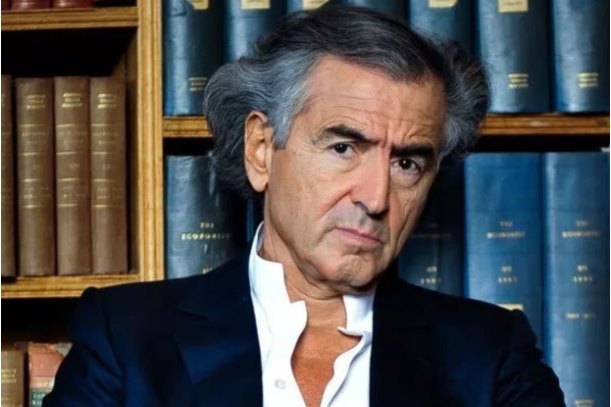
Bernard-Henri Lévy is one of the founders of the “Nouveaux Philosophes” (New Philosophers) movement. His books include Left in Dark Times: A Stand Against the New Barbarism, American Vertigo: Traveling America in the Footsteps of Tocqueville, and most recently, The Empire and the Five Kings. Copyright: Project Syndicate
Other Features
-
Beyond the Dangote IPO: What happens when the promise is tested
Every investor weighing the Dangote offer is making a judgement about the future, knowing there are no guarantees.
-
-
Analysis of Nigeria’s new virtual asset taxation framework
The framework is technically rigorous and sound, but its success will depend heavily on administrative capacity and ...
-
No free ride: Uber’s African retreat
Nigeria hardly offered Uber a competition-free road. Uber was not even the country’s first ride-hailing ...
-
What will determine the next gold price movements
Gold still has strong bullish fundamentals over the medium term. However, the path toward higher levels is unlikely ...
-
What would make Sidi Ould Tah smile?
After a year in office, Sidi Ould Tah has begun to reshape how the African Development Bank raises money and prepares ...
-
Nigeria’s Paris Club debt deal: A factual rejoinder to Donald Duke
Obasanjo’s credit was never in danger and did not require Duke to vandalise everyone else’s contribution.
-
Where to sell Steam gift cards in Nigeria: Rates, apps and how to ...
See where to sell Steam gift cards in Nigeria, current 2026 Steam card rates, and how to get paid on ...
-
Nigeria is building a sustainable health financing future
Gavi’s US$500 million support will help protect Nigeria’s children over the next five years while ...


Most Popular News
- CBN cuts interest rate to 23 per cent in surprise shift towards growth
- Oil falls below $100 on hopes of swift Saudi supply recovery
- Guterres renews call for polluters to pay
- WIOCC secures new investors for Africa infrastructure expansion
- AFC backs N729bn bond issuance under Nigeria's power sector reforms
- Afreximbank signs $500m facility with ATDC to boost intra-African trade
Quick Search for Upcoming Events