As millions lose jobs, targeting nonconsumption is more important than ever
Feature Highlight
Victory Farms is hiring people when other organizations are laying off people in droves.
It’s the beginning of the year and you have high hopes for your family. Your two children are about to start school and your spouse is working on launching a new business. You live in an emerging economy and make roughly $150 a month. Unemployment is high, but somehow you have a feeling that 2020 will be a breakthrough year. Then March rolls around and the pandemic you’ve been hearing about gets serious. You can’t really see it, but the effects quickly become very real to you and your family. You lose your job, progress on launching your spouse’s business stalls, the government enforces strict lockdown procedures, and schools in the area are shut down. Just like that, a year that started with so much promise is shaping up to be one of the worst years of your life. Unfortunately, that picture is all too real for millions of people globally.
According to the International Labor Organization, the economic ramifications of COVID-19 have caused hundreds of millions of job losses this year, and the effects are far from over. Businesses large and small are thinning operations or shutting down altogether, leaving a massive amount of people – especially those in emerging economies where there are little to no safety nets – in a precarious situation. How might the private sector, supported by the development community, respond to the devastation?

The invisible power of the nonconsumption economy
Interestingly, while businesses across the globe have been turning off their lights, other organizations have managed to flourish. Their secret? Targeting nonconsumption.
Nonconsumption occurs when the vast majority of people in an economy would benefit from access to a product or service, but due to obstacles such as cost, expertise, time, or availability, they are unable to afford the product. Because nonconsumers often make up the majority in emerging economies, innovators who target them necessarily create many jobs to serve the vast new market, and often inspire other organizations to participate and expand it.
For example, before companies like MicroEnsure came on the scene, basic insurance products weren’t available to most people in many emerging economies. Today the company serves tens of millions of previous nonconsumers of insurance in Ghana, Kenya, India, Pakistan, Philippines, and Tanzania. MicroEnsure is not alone, however. Another company, PasarPolis, serves customers in Indonesia, Thailand, and Vietnam. The company just raised $54 million in its series B round. The company has hired more than 10,000 agents to issue more than 650 million policies to first-time buyers in 2019. And in June – in the middle of the pandemic – PasarPolis issued 35 million new policies.
With poverty on the rise, other organizations can mitigate some of the devastation caused by COVID-19 pandemic by targeting the vast nonconsumption that is surely expanding in emerging economies. Not only will doing so create (or save) much needed jobs, but it will also create a strong foundation to build future economic prosperity. Consider Kenya’s Victory Farms.
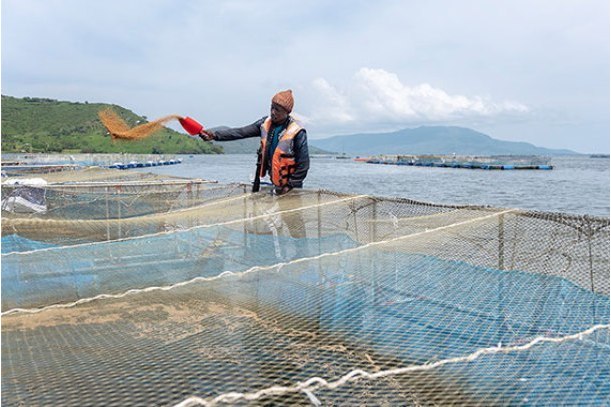
When the pandemic began and Kenya enforced lockdowns, it seemed like the end was near for Victory Farms. The company, which sold fresh fish primarily to hotels, restaurants, and open-markets, initially saw sales plummet. But Victory Farms quickly refocused its efforts on serving nonconsumers in the region whose means of accessing fresh fish had dwindled. Company executives realized that much of the competition (inexpensive and sometimes toxic fish from China) was no longer available as borders were closed. And so, instead of shutting down operations, Victory Farms doubled down and recently installed 12 new 30-meter cages in Lake Victoria. Each cage can stock up to 400,000 fish.
Despite COVID-19 restrictions in Kenya, the company continues to see month over month growth and just earned their highest revenue to date. In order to meet demand, Victory Farms is hiring people when other organizations are laying off people in droves. In addition, the company recently launched an outgrower programme to empower local fishermen and is even investigating expanding its operations into other East African countries. What if other businesses prioritized nonconsumption? What if more development dollars were used to enable them?
Until people across the globe have universal access to the products and services that will improve their lives, there will always be a market opportunity to target nonconsumers with simple and affordable products. Now more than ever, with so many people struggling to make ends meet, development organizations have an opportunity to empower businesses and reduce joblessness by supporting struggling emerging-market entrepreneurs targeting nonconsumption.
Efosa Ojomo is a senior research fellow at the Christensen Institute, and co-author of The Prosperity Paradox: How Innovation Can Lift Nations Out of Poverty. Efosa researches, writes, and speaks about ways in which innovation can transform organizations and create inclusive prosperity for many in emerging markets.
The article is published under the editorial partnership between Financial Nigeria and the Clayton Christensen Institute, to promote market innovation.
Other Features
-
-
Analysis of Nigeria’s new virtual asset taxation framework
The framework is technically rigorous and sound, but its success will depend heavily on administrative capacity and ...
-
No free ride: Uber’s African retreat
Nigeria hardly offered Uber a competition-free road. Uber was not even the country’s first ride-hailing ...
-
What will determine the next gold price movements
Gold still has strong bullish fundamentals over the medium term. However, the path toward higher levels is unlikely ...
-
What would make Sidi Ould Tah smile?
After a year in office, Sidi Ould Tah has begun to reshape how the African Development Bank raises money and prepares ...
-
Nigeria’s Paris Club debt deal: A factual rejoinder to Donald Duke
Obasanjo’s credit was never in danger and did not require Duke to vandalise everyone else’s contribution.
-
Where to sell Steam gift cards in Nigeria: Rates, apps and how to ...
See where to sell Steam gift cards in Nigeria, current 2026 Steam card rates, and how to get paid on ...
-
Nigeria is building a sustainable health financing future
Gavi’s US$500 million support will help protect Nigeria’s children over the next five years while ...
-
An analysis of the Executive Order on Virtual Assets 2026
The new presidential executive order addresses a real problem – the cost and risk of regulators working in ...


Most Popular News
- Dangote Refinery posts $1.82 billion profit ahead of landmark IPO
- BoE rate hold draws criticism as inflation climbs above 3 per cent
- Digital services boom widens global trade gap, UNCTAD says
- AfDB approves $5.1 billion response to energy and fertiliser shocks
- Alliance to End Plastic Waste reports progress on circular economy
- CBN elevates terrorism financing oversight as key supervisory priority
Quick Search for Upcoming Events