Latest News
World Bank projects 3.4 percent GDP growth for sub-Saharan Africa in 2019
News Highlight
Nigeria's GDP growth rate is expected to rise from estimated 1.9 percent in 2018 to 2.2 percent in 2019 on the back of oil production recovery.
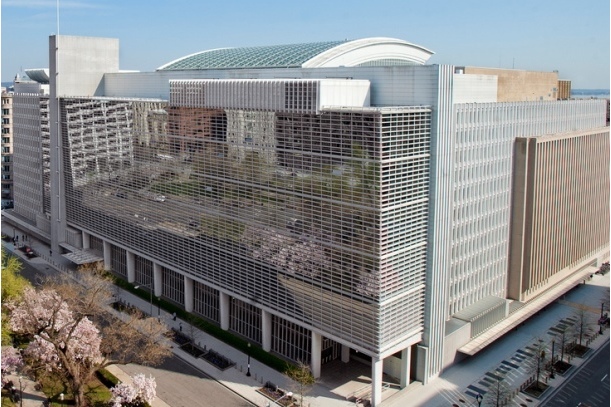
In its 2019 Global Economic Prospects Report released on Tuesday, the World Bank projected Sub-Saharan Africa’s economic growth to accelerate to 3.4 percent in 2019, from an estimated 2.7 percent in 2018. This outlook is predicated on diminished policy uncertainty and improved investment in large economies on the sub-continent, together with continued robust growth in non-resource-intensive economies.
In Nigeria, the largest economy in the sub-region, growth is expected to rise from estimated 1.9 percent in 2018 to 2.2 percent in 2019, on the back of oil production recovery. Angola and South Africa are also expected to record 2.9 percent and 1.3 percent growth in 2019, respectively, compared to -1.8 percent and 0.9 percent, respectively in 2018.
The World Bank projected a slower GDP growth rate for the global economy from 3 percent in 2018 to 2.9 percent in 2019. Growth among advanced economies is also projected to drop from 2.2 percent to 2 percent, while emerging market and developing economies growth is expected to stagnate at 4.2 percent.
“At the beginning of 2018, the global economy was firing on all cylinders, but it lost speed during the year and the ride could even get bumpier in the year ahead (2019),” said Kristalina Georgieva, World Bank CEO. “As economic and financial headwinds intensify for emerging and developing countries, the world’s progress in reducing extreme poverty could be jeopardized. To keep the momentum, countries need to invest in people, foster inclusive growth, and build resilient societies.”
Other findings made by the World Bank in the report show the informal sector accounts for about 70 percent of employment and 30 percent of GDP in emerging markets and developing economies. The report also shows debt vulnerabilities are rising in low-income countries; and policies aimed at softening the blow of global food price swings can have unintended consequences if implemented by many governments in uncoordinated fashion.
“As the outlook for the global economy has darkened, strengthening contingency planning, facilitating trade, and improving access to finance will be crucial to navigate current uncertainties and invigorate growth,” said Ceyla Pazarbasioglu, Vice President for Equitable Growth, Finance and Institutions at the World Bank.
Related News
-
CBN elevates terrorism financing oversight as key supervisory priority
The central bank noted that the heightened focus aligns with Nigeria’s ongoing efforts to enhance domestic and ...
-
NADF calls for stronger institutions to unlock agricultural investment
According to Ibrahim, investors are looking for an ecosystem where farmers can be easily identified, agricultural data is ...
-
Oil prices stay elevated as Middle East tensions raise supply concerns
According to Jonathan Squires, CEO of Tapaas, oil prices have remained close to multi-week highs following renewed security ...


Latest Blogs
- Governor Peter Mbah’s Tomorrow Enugu
- Startups are becoming Nigeria’s new social infrastructure
- Politics as the engine of economic transformation
- What the fake agency scandal means for FDI in Nigeria
- Lagos flooding and the cost of weak urban resilience
Most Popular News
- MTN engages global bond investors as IHS Towers acquisition nears
- Export development fund expands to Senegal and Liberia
- Uber leaves Nigeria and Uganda as part of wider global restructuring
- Oil prices stay elevated as Middle East tensions raise supply concerns
- Ghana offers sweeter terms to attract new oil investment
- South Korea, Africa to focus on AI and digital infrastructure at conference
Quick Search for Upcoming Events