FirstBank partners Azuri Technologies to expand access to solar power
Summary
Customers will be able pay for their solar photovoltaic system via FirstBank’s Firstmonie agents and mobile payment solution, thereby deepening financial inclusion in the country.
Azuri Technologies, a leading pay-as-you-go solar technology provider in Africa, and First Bank of Nigeria have announced a unique partnership to deliver affordable, reliable and clean power to millions of Nigerians.
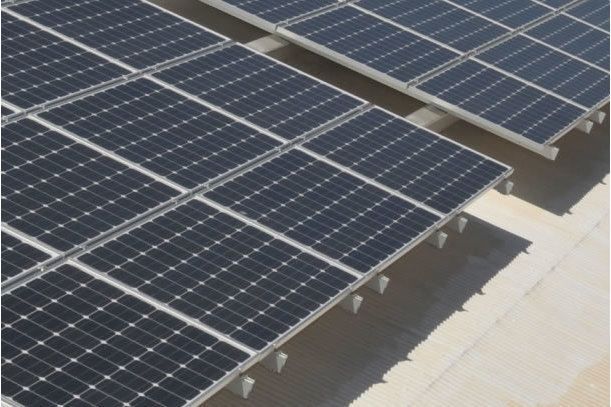
Under this partnership, FirstBank and Azuri will co-brand and co-market Azuri’s solar home television product. The pay-as-you-go customers will also be able to pay for their solar photovoltaic (PV) system via FirstBank’s Firstmonie agents and mobile payment solution, thereby deepening financial inclusion in the country.
“This partnership combines the reach of FirstBank with Azuri’s technology and pay-as-you-go solar expertise to bring next-generation power to off-grid consumers in Nigeria,” said Simon Bransfield-Garth, the CEO of Azuri.
According to a statement released by Azuri on Thursday, about 16,000 Firstmonie agents are positioned within rural and semi-urban locations across the country. These agents provide basic financial services such as account opening, cash deposit, cash withdrawals and bill payments.
Last month, a new study by BloombergNEF (BNEF) showed that a combination of poor supply of electricity, high electricity tariffs and falling prices of solar PV is driving adoption of on-site solar power by businesses in Sub-Saharan Africa (SSA). The BNEF report also shows that on-site solar power is cheaper than the electricity tariffs paid by commercial or industrial clients in seven out of 15 markets in SSA studied by the research company, including Nigeria.
The study showed that Nigeria is the most economically viable market for commercial and industrial (C&I) solar power in the region, with 10,713 GWh/year C&I power demanded as of 2015.
According to the CEO of FirstBank, Adesola Adeduntan, “Financial inclusion is a priority with FirstBank. With this partnership, our customers will be able to access a wide range of services that address real problems such as access to power.”
More than 60 million Nigerians do not have a bank account and only six per cent of the population has a mobile money account, according to the World Bank.
Azuri systems, ranging from solar home lighting to solar satellite TV, are designed to deliver world-class performance at an affordable price for all customers that experience irregular power supply. Customers can make weekly or monthly payments to unlock their systems and power.
According to the statement, pay-as-you-go solar is transforming lives by providing energy for lighting, TVs and charging phones. It also helps to boost local economies with new employment opportunities and connect off-grid households to financial and digital services which improve productivity and increase income.
Since 2012, Azuri has delivered solar home systems to consumers in 12 countries across the SSA. The company, with offices in the United Kingdom, Nairobi, Lagos, Dar es Salaam, Kampala and Lusaka, has sold more than 150,000 systems.
Related
-
Renewable energy boom highlights growing regional divide
Over 70% of renewable energy capacity growth occurred in Asia, while other regions, particularly Africa, lagged behind, ...
-
AfDB provides $24mn to Rwanda for regional hydropower project
The project will increase Rwanda’s clean energy generation capacity by about 50 megawatts.
-
A case for national LPG and clean cooking strategy in Nigeria
The government should also provide support for low-income households to be able to acquire clean cookstoves.


Sustainable Development Section Sponsor
-
Access Bank Plc ...Financing the future

Most Popular
- Why is Europe’s economy falling short? Part 1
- IFC launches $2bn green bond as investor demand surges to record levels
- Cocoa value-addition push as new test for Nigeria’s industrial ambition
- Farmers worldwide report income strain and climate losses – survey
- Afreximbank President visits African Medical Centre of Excellence, Abuja
- Africa’s bid to capture more mineral value