First two projects for Africa Climate Fund get approval
Summary
The AfDB-managed ACCF was established in April 2014 with a EUR 4.725 million contribution from Germany with the objective to scale up climate smart development in African countries by increasing the mobilization of international climate finance.
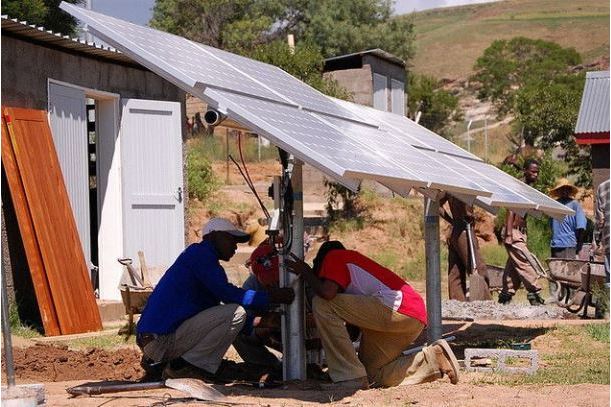
The newly established Africa Climate Change Fund (ACCF) has approved its first two projects. One will support Mali with preparatory funding to advance its low-carbon, climate resilient development agenda; and the second will strengthen data and information on climate change vulnerabilities and opportunities for 54 African countries.
A grant of $404,000.00 from the ACCF will support the government of Mali to develop strategic programmes for a climate resilient and green economy in two key sectors, to elaborate a strategy for financing its transition to green and climate resilient growth, and to attract private sector investment in this transition. It will furthermore strengthen the capacity of the Malian Agency for Environment and Sustainable Development (AEDD), the executing agency for the project, in the management of climate finance.
A second grant of $420,000.00 to be executed by the African Development Bank (AfDB), will enable up-to-date information on climate change vulnerabilities, greenhouse gas emissions, and opportunities for climate change adaptation and mitigation to be produced for 54 African countries, tailored to the specific information needs of each country. It will further develop a global platform for sharing and updating the information in the profiles, and provide training for staff of economic and planning departments in African countries to understand and apply the data. The project will equip African countries with strengthened data and capacity to strategically plan for long-term climate change interventions and to access international climate finance.
The AfDB-managed ACCF was established in April 2014 with a EUR 4.725 million contribution from Germany with the objective to scale up climate smart development in African countries by increasing the mobilization of international climate finance.
Related
-
Observing the green swans
It is incumbent on the institutions in charge of financial stability to ensure that green swans do not turn black.
-
EU leaders reach deal on 55 per cent carbon emissions target by 2030
The deal is expected to help the 27-member bloc achieve its green transition plan, which entails reaching net-zero GHG ...
-
First-ever carbon credit transaction recorded in West Africa
"Similar CO2 offset transactions are under negotiation with African hotel chains, carriers and agribusinesses," said ...


Sustainable Development Section Sponsor
-
Access Bank Plc ...Financing the future

Most Popular