Ebola vaccine induces immune response in new trial
Summary
The vaccine induced an immune response that persisted for approximately one year in healthy adult volunteers.
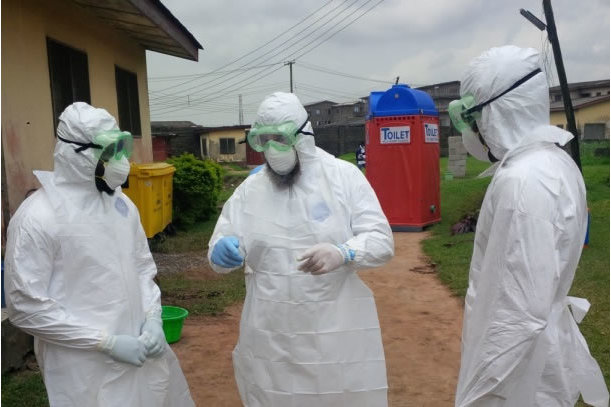
Johnson & Johnson, a global manufacturer of pharmaceutical and consumer products, and Bavarian Nordic, a Danish biotechnology company, have announced the conclusion of the Phase 1 clinical trial of a two-vaccine regimen intended to protect against Ebola virus disease. The vaccine induced an immune response that persisted for approximately one year in healthy adult volunteers, according to results published this week in the Journal of the American Medical Association.
The study was led by the Oxford Vaccine Group of the Department of Paediatrics at the University of Oxford. 75 healthy participants in Oxford, UK, aged 18 to 50 years volunteered to be given one vaccine dose to prime their immune system, and a second vaccine to boost their immune response. No serious vaccine-associated adverse events were observed in all 64 participants who remained in the study at day 360.
“The world needs a vaccine to help prevent or mitigate future Ebola outbreaks, and ideally it should provide sustained protection for at-risk populations,” said Paul Stoffels, M.D., Chief Scientific Officer, Johnson & Johnson.
The pharmaceutical giant said recent evidence highlighting the persistence of the Ebola virus in bodily fluids, and the potential for sexual transmission among Ebola survivors, reinforce the importance of finding a robust and durable vaccine for this disease.
The 2013-2016 Ebola outbreak resulted in over 11,300 fatalities. First cases were recorded in Guinea in December 2013. The disease spread to neighbouring Liberia and Sierra Leone. Small outbreaks happened in Nigeria and Mali and a few cases in Senegal, United Kingdom, United States and Spain. The World Health Organization (WHO) declared the end of Ebola transmission in Guinea on 29 December, 201; in Liberia on 14 January, 2016; and in Sierra Leone on 17 March, 2016.
The Phase 1 clinical trial was launched in 2015 by Johnson & Johnson’s Janssen Pharmaceutical Companies. In September 2016, Janssen completed a submission to WHO for Emergency Use Assessment and Listing (EUAL) for the investigational preventive Ebola prime-boost vaccine regimen. Janssen, in partnership with Bavarian Nordic, has rapidly scaled up production of the vaccine regimen, with 1.8 million regimens now available, with the capacity to produce several million regimens if needed.
Meanwhile, the researchers noted that additional research is necessary to assess the durability of immunity beyond one year and the immune response to booster doses of vaccine. The additional studies are ongoing to confirm these findings.
The Ebola vaccine programme has received funding of up to $28.5 million from the Biomedical Advanced Research and Development Authority (BARDA) a subsidiary of the U.S. Department of Health and Human Services.
Related
-
How to fight antimicrobial resistance
The parasite that causes malaria is developing resistance to artemisinin, which forms the basis for the most effective ...
-
Vaccine alliance backs typhoid shots for poor with $85 million
While typhoid is a bacterial disease that can be treated with antibiotics, access to antibiotics in poorer regions is ...
-
The deadly axis of TB and diabetes
Type-2 diabetes not only renders the body incapable of processing or responding to insulin; it also weakens the immune ...


Sustainable Development Section Sponsor
-
Access Bank Plc ...Financing the future

Most Popular