
Decarbonisation technology market to reach $4 trillion by 2032

Summary
As the global economy grows and demand for industrial products (such as steel and cement) increases, industrials are looking to introduce decarbonisation technologies to support emissions reduction efforts.
The decarbonisation technologies market is expected to grow from $1.45 trillion in 2022 to $4.09 trillion in 2032, growing at a CAGR of 10.93%. This is according to a new study by the global intelligence firm ABI Research.
The industrial sector is one of the highest contributors to global emissions. Reducing emissions in the sector presents one of the most significant challenges to worldwide decarbonisation and reaching net-zero emissions by 2050. As the global economy grows and demand for industrial products (such as steel and cement) increases, industrials are looking to introduce decarbonisation technologies to support emissions reduction efforts.
“The decarbonisation technology market is being driven by exponentially increasing annual investments, decreasing costs of renewable energy infrastructure, and growing global commitments from industrial companies to reduce emissions and develop sustainable products,” explains Alex McQueen, Research Analyst at ABI Research. “Regulation has also been a key market driver for decarbonisation technologies. Europe, for example, has established its Green Deal Industrial Plan, which lays out steps to implement technologies required to cut the sector’s carbon emissions.”
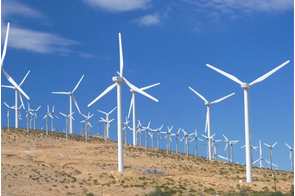
The industrial decarbonisation technology market is led by the growth of electrification technologies, including renewable energy and industrial electric machinery. These account for a significant 71.5% of the market in 2022 and are expected to contribute most of the emissions reduction needed to reach net zero.
Renewable energy consumption globally continues to grow as infrastructure costs decrease and the current energy crisis deteriorates the cost-competitiveness of fossil fuels.
Energy efficiency technologies, such as energy storage and management systems, hold the second largest market share at 23.6%, followed by low-carbon fuels at 4.6% and carbon capture, utilization, and storage at 0.3%.
Companies such as Honeywell, Shell, and Siemens are globally leading suppliers of decarbonisation technologies for the industrial sector.
In addition, the market is seeing an increasing number of companies focusing on developing innovative clean technologies and products. These include Air Liquide, Baker Hughes, CarbonCure Technologies, Li-Cycle, and SSAB.
While investment in clean technology is growing rapidly, forecasts show that annual investments fall drastically short of what is required to achieve net zero by 2050. This lack of investment in project funding and R&D means critical technologies, such as energy storage and carbon capture, lack the necessary development to contribute meaningful emission reductions.
“Decarbonising the industrial sector will require a major increase in global green tech investment, as well as stronger policy incentives to scale up commercial availability and affordability of these technologies. Necessary emissions reduction will only be achieved through close collaboration with governments, industrials, and technology suppliers,” concludes McQueen.
These findings are from ABI Research’s Decarbonization Technologies for Industries application analysis report. This report is part of the company’s Sustainability for Industrial Markets research service, which includes research, data, and ABI Insights. Based on extensive primary interviews, Application Analysis reports present an in-depth analysis of key market trends and factors for a specific technology.
Related
-
Switching on the REDD+ key in Nigeria
There are ample REDD+ preparation funds available in the form of grants.
-
Panalpina, CMA CGM sign sustainability agreement for maritime transport
CMA CGM and Panalpina have committed to reduce CO2 emissions by 30 percent and 22 percent, respectively, by 2025.
-
AfDB to triple Annual Climate Financing to nearly $5bn by 2020
The African Development Bank has committed almost $7 billion to support climate-resilient and low-carbon development in ...
Sustainable Development Section Sponsor
-
Access Bank Plc ...Financing the future

Most Popular
- World Bank urges Africa to shift from trade links to production hubs
- WHO declares Uganda Ebola-free after 42 days of no new infections
- Alliance to End Plastic Waste reports progress on circular economy
- GSMA warns soaring smartphone costs could create a global AI divide
- Guterres renews call for polluters to pay