Will Bitcoin solve Africa’s banking challenges?
Feature Highlight
Bitcoin is the building block and peer-to-peer finance is the big picture.
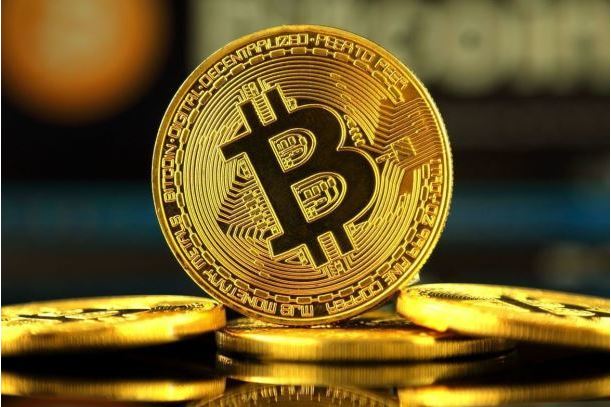
Who would have ever thought that bitcoin would evolve into a cryptocurrency juggernaut like it is now? The prices (even at its low points) are unmatched in the cryptocurrency community, reaching all-time highs that no one could ever expect. Bitcoin is the reason there are so many cryptocurrencies in the first place. However, bitcoin’s price serves as a double-edged sword. In other words, trading bitcoins has advantages and disadvantages.
The advantages, obviously, would be that it could earn you significant amounts of money if your investments pan out. The disadvantage would be that sudden price jumps can scare away investors and potential newcomers to the industry. The volatility makes it seem like it is a risky investment.
Now that times have changed, bitcoin is slowly starting to develop more and more advantages. With the peer-to-peer finance revolution, it has now become extremely easy to buy bitcoin. The process of buying bitcoin is now easier and faster than ever but that’s not even the primary advantage it has. The best thing that bitcoin has is the ability to help the underbanked and the economically challenged.
Africa’s banking issues
If you’re living in an urban area, you should know by now that banks are everywhere. It seems like there’s a bank on every street or on the next street at the very least. That’s probably because each person’s life is so dependent on one’s bank account. Having a bank account means that your money is secure and is stored in a convenient place, which you can access at any time. The problem with banks is that not everyone has access to them.
In countries with struggling economies, like in Africa, not many people can get a bank account. 23.5% of the African population isn’t in any banking systems. Moreover, an estimate of 1 billion US dollars is being held in cash, according to Oxford Business Group. As a cherry on top, the fiat currencies of Africa are also experiencing inflation, making it even harder for the African people to keep their wealth stable.
How Bitcoin can help Africa’s cause
Despite all of the economic struggles that Africa is experiencing, many of the disadvantaged people still continue to show their resilience. They find creative solutions to the restrictions they face. With peer-to-peer finance, people are able to find multiple solutions. They find ways out of the economic mess they find themselves in. Bitcoin is the building block and peer-to-peer finance is the big picture. Not only has peer-to-peer finance revolutionized the way we control our money, but it also has the ability to break down barriers. Peer-to-peer finance also allows people to earn an honest living. Those two things are what make peer-to-peer finance so special.
Peer-to-peer finance has a lot of real-life uses and the people of Africa are taking full advantage of this. People from all over the world are learning from what Africans are doing. Here are some of the more popular real-life uses of peer-to-peer finance:
Earning an income
Peer-to-peer finance has revolutionized the way bitcoins are bought, sold, and traded. With the personalized touch that peer-to-peer marketplaces bring, more control is given to the users. As a seller, you can set your own selling preferences. This means being able to control how much you make. This also affects how long the trade is supposed to last. And even where you want your trade partner to be from (if you’re looking for nearby offers). As buyers, there are a lot of offers that show up (especially if you’re using a popular payment method). You can filter these out based on your preferences as well.
On peer-to-peer platforms, the price of bitcoin starts to become irrelevant when you’re constantly trading. This is something that the African people have found out and now, more people are learning from their discoveries. Frequently trading, converting their bitcoin into multiple forms, is how Africans make a profit.
Making payments
Payments are easy to make when you have a credit card or debit card with a high limit. If you have these, then you can easily make purchases online and items will be shipped to you immediately. It’s extremely easy and efficient but not everyone in the world has this luxury.
In Africa, a lot people struggle with making these kinds of payments (especially if they’re international payments). Without a bank account, it’ll be much harder to make payments. Even if you are able to make those payments, the payment intermediaries usually charge a high fee.
The payment fees are not the only problem. Even if you do have a debit card in, say, Nigeria, there is usually a spending limit. Normally, the spending limit is at about $100 and some banks increase it to $1000 if you’re on the wealthier side. This is way too small to buy a, say, new smartphone. Because of peer-to-peer finance, there’s a workaround to this problem. The first step is to buy some bitcoin and once you’ve obtained enough bitcoin, you can trade it for another payment method like AliPay or PayPal. By using these payment options, you can purchase products easier and more efficient.
Preserving wealth
As said earlier, Africa is experiencing a little bit of inflation. It must be hard seeing your own currency diminish in value more and more every day. Bitcoin and peer-to-peer finance can help protect currencies from inflation. That is, if people convert them into bitcoin. By doing this, people are able to stop inflation from devaluing their money even more.
We’ve got a lot to learn
Looking at how the African people are solving their problems with peer-to-peer finance, it’s becoming clearer and clearer that there’s a lot to learn from them. They have started a peer-to-peer revolution and it’s up to us to join them. Peer-to-peer finance is the future of money and bitcoin is the perfect vehicle. Bitcoin is no longer JUST for making profits anymore. Peer-to-peer finance shows us that it’s more than just an investment tool. Peer-to-peer finance is showing us that it has the capability to help millions of people all over the world. Peer-to-peer finance is showing us that there’s a new way to use our money. Most importantly, peer-to-peer finance is showing us that each of us has the power to control our own money,
The revolution has clearly begun and I, for one, am joining the movement. Will you join in as well?
Other Features
-
Beyond the Dangote IPO: What happens when the promise is tested
Every investor weighing the Dangote offer is making a judgement about the future, knowing there are no guarantees.
-
-
Analysis of Nigeria’s new virtual asset taxation framework
The framework is technically rigorous and sound, but its success will depend heavily on administrative capacity and ...
-
No free ride: Uber’s African retreat
Nigeria hardly offered Uber a competition-free road. Uber was not even the country’s first ride-hailing ...
-
What will determine the next gold price movements
Gold still has strong bullish fundamentals over the medium term. However, the path toward higher levels is unlikely ...
-
What would make Sidi Ould Tah smile?
After a year in office, Sidi Ould Tah has begun to reshape how the African Development Bank raises money and prepares ...
-
Nigeria’s Paris Club debt deal: A factual rejoinder to Donald Duke
Obasanjo’s credit was never in danger and did not require Duke to vandalise everyone else’s contribution.
-
Where to sell Steam gift cards in Nigeria: Rates, apps and how to ...
See where to sell Steam gift cards in Nigeria, current 2026 Steam card rates, and how to get paid on ...
-
Nigeria is building a sustainable health financing future
Gavi’s US$500 million support will help protect Nigeria’s children over the next five years while ...


Most Popular News
- AFC backs N729bn bond issuance under Nigeria's power sector reforms
- CBN cuts interest rate to 23 per cent in surprise shift towards growth
- Oil falls below $100 on hopes of swift Saudi supply recovery
- Guterres renews call for polluters to pay
- WIOCC secures new investors for Africa infrastructure expansion
- Afreximbank signs $500m facility with ATDC to boost intra-African trade
Quick Search for Upcoming Events