
Hunger, poverty at the root of conflict, says Italian president
Summary
Sergio Mattarella said investing in smallholder agriculture will help to stabilize communities and reduce conflict.
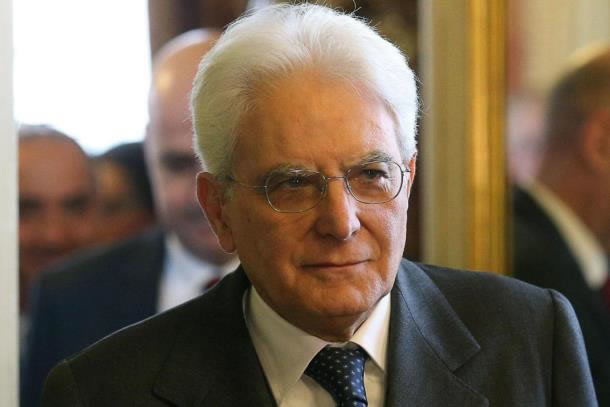
The President of Italy, Sergio Mattarella, said on Wednesday that investing in smallholder agriculture in developing countries will help to stabilize communities and reduce migration and conflict. Mattarella was speaking during the opening of the 39th Session of the Governing Council of The International Fund for Agricultural Development (IFAD).
“Agriculture plays a fundamental role,” said Mattarella. “You achieve the means to feed families, support forms of social organization, preserve land and biodiversity, fight against climate change, create jobs and prosperity, contribute to stable and just societies and, most importantly, eradicate the root causes that push more people to emigrate."
Mattarella further said, “Hunger and poverty are insidious and are at the root of conflict and instability and are the link in the chain that we need to break first to deal with emergencies and humanitarian disasters.”
The IFAD Governing Council is meeting on February 17-18 in Rome. The Council consists of heads of state, government representatives and development leaders.
In his opening remarks, IFAD President, Kanayo F. Nwanze, stressed that governments cannot afford to lose focus on long-term development. He said Agenda 2030 – the worlds new 17 Sustainable Development Goals – calls for nothing less than the creation of prosperity, health and security for all while protecting the planet over the next 15 years.
“We face the very real risk of seeing reversals in the development gains made in poverty and hunger in recent years,” Nwanze told representatives of IFAD’s 176 member states attending the annual conference.
Around 3 billion people live in the rural areas of developing countries. They account for about 40 per cent of the world’s population yet they represent more than 70 per cent of the world’s poorest and hungriest. Most depend on agriculture for their lives and livelihoods. Focusing attention on poor rural people, particularly smallholders, is key to achieving SDG1 to end poverty and SDG2 to end hunger.
As currently witnessed in southern African, one of the greatest threats to food production is climate change. The IFAD President said terror, mass migration and drought are worsening in southern Africa where nearly 14 million people are now in danger of going hungry.
The United Nations supports rural people and empowers them to reduce poverty, increase food security, improve nutrition and strengthen resilience. The organization has provided about $17.6 billion in grants and low-interest loans to projects around the world since 1978.
IFAD’s climate change strategy that includes the ASAP – the Adaptation for Smallholder Agriculture Programme – assists farmers in developing countries around the world to adapt to changing climatic conditions.
IFAD’s Governing Council meeting concludes on Thursday with the IFAD Lecture Series. This year’s lecture will be delivered by Dr. Mohamed Ibrahim, globally recognized entrepreneur and founder of the Mo Ibrahim Foundation.
Related
-
Covid-19 response must include provision of food to the vulnerable
In Vietnam, automatic rice dispensing machines, also known as "rice ATMs" have been used during this Covid-19 outbreak to ...
-
IFAD to support food security project in Swaziland
The project will promote adoption of modern agricultural technologies and techniques.
-
AfDB plans to empower African Women in Agriculture
Women make up almost 50% of the agricultural labour force in Sub-Saharan Africa. A total of 62% of economically active ...
Sustainable Development Section Sponsor
-
Access Bank Plc ...Financing the future

Most Popular