Four things to note about Buhari’s medical vacation
Feature Highlight
Knowing what Buhari’s ailment is does not imperil Nigeria’s national security any more than the knowledge of Theresa May’s T1D condition has jeopardized the national security of the United Kingdom.
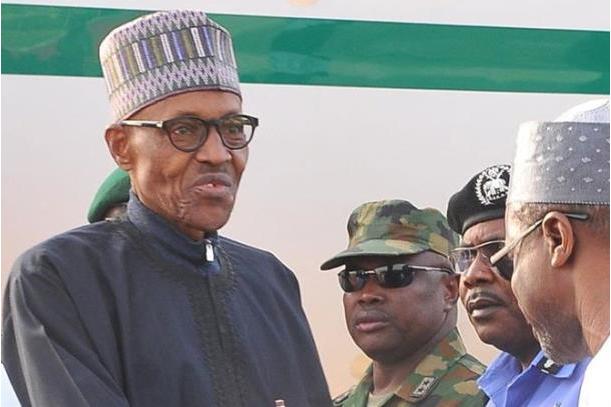
President Muhammadu Buhari resumed on Monday following an extended medical vacation in London. The president left Nigeria on January 19 on what was initially supposed to be a 10-day leave, during which time he would undertake "his normal annual check-up," according to the president's Special Adviser on Media and Publicity, Femi Adesina.
The president's vacation was then extended indefinitely because, in the course of his medical check-up, test results showed he needed a longer period of rest. Nigerians were reassured that the president's condition was nothing to be worried about. There has since been a cacophony of commentaries on the president's vacation. But here are a few things to consider.
Denying the public's right to know
It is public knowledge that Prime Minister of Britain, Theresa May, suffers from type 1 diabetes, a condition which she manages with four insulin injections every day. As President of France, Charles de Gaulle had a surgery to remove his prostate gland at the age of 73. He asked his doctors to disclose the operation to the public. However, the Nigerian president is operating in a vastly different political environment, where disclosure of the health condition of a public official is not part of the social contract. Although Buhari alluded to having a blood transfusion when he returned from London on Friday, his illness is still being kept tightly under wraps.
By his own admission he was acutely sick, contrary to the (mis)information provided by his sycophantic aides and the Vice President who said Buhari was "hale and hearty,' and that he was simply undergoing “routine medical check-ups” during his vacation. The president now says, in fact, he would return to London for follow-up medical review for a health condition that remains a top secret.
Knowing what Buhari’s ailment is does not imperil Nigeria’s national security any more than the knowledge of May’s health condition has jeopardized the national security of the United Kingdom. On the contrary, shrouding the president’s health condition in secrecy only diminishes his credibility.
Resigning for health reasons
Several world leaders have resigned from office because of ill health. Japanese Prime Minister Shinzo Abe ended his first term in office in 2007 for health reasons. He resigned after one year in office due to chronic ulcerative colitis, a type of inflammatory bowel disease. When he knew that he was physically and mentally ready again for the grueling demands of the job, he staged a political comeback and has remained in office since 2012.
Fidel Castro did not have to resign due to ill health. But in his resignation letter in 2008, he said, “It would betray my conscience to occupy a responsibility that requires mobility and the total commitment that I am not in the physical condition to offer.” He could have continued to exercise presidential powers while his brother, Raul Castro, remained in acting capacity for another eight years before he passed on in 2016 at the age of 90.
With Buhari's undeclared health condition, Nigeria faces a political conundrum. Osinbajo would not be sworn in as president as long as Buhari refuses to resign for health reasons.
Protected by a poorly-drafted constitution
For how long can the Nigerian president stay in office without being physically fit to discharge his functions? Unfortunately, the Nigerian constitution is too ambiguous or improperly drafted to address this important question. Going by the constitution, Vice President Yemi Osinbajo would have remained as Acting President indefinitely, perhaps until 2019.
Section 145 of the 1999 Constitution states: "Whenever the President transmits to the President of the Senate and the Speaker of the House of Representatives a written declaration that he is proceeding on vacation or that he is otherwise unable to discharge the functions of his office, until he transmits to them a written declaration to the contrary such functions shall be discharged by the Vice-President as Acting President."
According to section 144 of the constitution, for the President or Vice-President to be declared incapable of discharging the functions of his office, a resolution needs to be passed by two-thirds majority of all the members of the executive council. The declaration needs to be backed by a medical examination conducted by a medical panel, which shall be set up by the Senate President.
However, the current reality is that politics will trump the duty members of the legislature have to “preserve, protect and defend the Constitution of the Federal Republic of Nigeria.” Moreover, the executive council is beholden to the president and both chambers of the National Assembly are currently controlled by the ruling party. Therefore, a constitutional process to remove Buhari is any analyst's pipe dream.
Influential role of unofficial aide
Punch newspaper had a report on February 26, 2017 with the title: "Access to President: Buhari’s powerful aides bar ministers, family, friends." According to the report, senior government officials and family members who made efforts to visit or call the president were being denied access. One of the president's aides allegedly controlling access to the president was Mamman Daura, Buhari’s nephew who has no official portfolio in the presidency.
Following reports that Daura was the most powerful person in the present administration, Buhari stated in October 2016, that he was in charge, not his nephew. However, the issue is not whether the president is in charge. Daura continues to travel with the president, begging the question of what kind of influence a non-government official has on government policy.
Public outrage over the level of influence former South Korean President, Park Geun-hye, gave to an unelected "spiritual adviser" led to her recent impeachment. Last week, South Korea’s Constitutional Court ruled to uphold the impeachment of Park by lawmakers in December. Park was impeached for the power she gave to Choi Soon-sil, a private citizen without official government title or security clearance. Choi's editing marks were found in a number of Park’s major policy speeches. The adviser was also leveraging her power and access to the president to fund non-profit organisations she controlled.
Unfortunately, Nigerians simply have to take the president at his word that his nephew has no say in his government.
Martins Hile is Executive Editor, Financial Nigeria publications
Other Features
-
Exploring the different types of online loans: Which one fits your ...
A quick loan is designed for fast approval and minimal paperwork.
-
Implications of SEC’s revised minimum capital requirements for ...
Capital Market Operators should ensure that they implement robust controls to ensure that any funds introduced in the ...
-
Building health systems for Africa’s vaccine sovereignty
The imperatives of reducing risk, strengthening markets, securing health futures
-
Analysis of CBN’s new regulations on cash management and dual ...
By revising cash policies and mandating dual connectivity for payment terminals, the Central Bank of Nigeria seeks to ...
-
Africa’s crypto investment market: where growth may emerge next
Africa’s crypto investment market: where the next growth coould explode.
-
Lessons from the 2025 Goalkeepers Report: What kind of innovation ...
The 2025 report issues a clear call to action for policymakers and engaged citizens.
-
Profit: The most powerful engine for scaling impact, dignity, and ...
The most prosperous countries in the world are not those with the most aid programmes. They are those with the most ...
-
Expect turbulent asset markets in 2026
The negative impact of Trump’s tariff and immigration policies will be felt more acutely in 2026.
-
The scars of partition
Contrary to his rosy assurances, partitions often result in tragedy, as borders drawn by cartographers rarely align ...


Most Popular News
- Artificial intelligence can help to reduce youth unemployment in Africa – ...
- MSC signs concession agreement to build new Lagos port
- NDIC pledges support towards financial system stability
- New GSMA report identifies gaps in rural connectivity gap
- Services expansion not scaling prosperity in least developed economies
- Stakeholders renew push for visa-free travel across Africa
Quick Search for Upcoming Events
Event Categories