Boris Johnson and the triumph of gullibility?
Feature Highlight
The success of populist politicians such as US President Donald Trump and new British Prime Minister Boris Johnson suggests that voters are becoming increasingly gullible. Although it is tempting to blame “fake news” and social media for this trend, recent psychological research points to a different and perhaps more startling explanation.
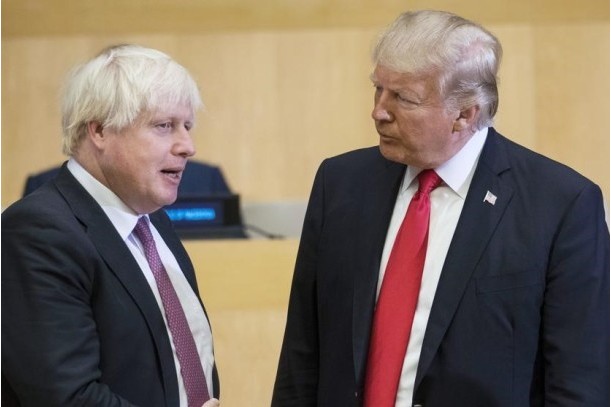
US President Donald Trump has already proclaimed that Boris Johnson, Britain’s new prime minister, is popular because he is seen as “Britain Trump” (sic). After all, both politicians are widely seen as having a “populist” style. For cynics, this implies a willingness to tell blindingly obvious untruths if doing so appeals to voters. The populist tag may also refer to such leaders’ “disruptive” impact, in the same way that new technologies have shaken up established industries overnight.
More important, some psychologists now suggest that the success of Trump, the Brexit championed by Johnson, and other populist causes might indicate that voters are becoming increasingly gullible. Although it is tempting to blame “fake news” and social media for this trend, recent psychological research suggests a different and perhaps more startling explanation.
Conventional wisdom holds that people vote for disruptive populists such as Johnson largely out of anger and resentment. But in a recent article, The Economist pointed out that populism and support for parties hostile to the status quo are rising at a time when opinion polls suggest that electorates have generally never been happier.
According to national surveys of happiness cited by The Economist, the proportion of Britons who consider themselves very or fairly satisfied with life rose from 88% to 93% between 2009 and 2017, while the share of those declaring themselves very satisfied jumped from 31% to 45%. In the European Union as a whole, the proportion of those claiming to be very or fairly satisfied rose from 77% in 1997 to 82% two decades later.
The Economist offered various theories to explain the paradox of happy people voting for ostensibly angry parties – including the demographically based argument that older voters are both more reactionary and happier than the rest of the electorate. But new research by Joseph Forgas, a psychology professor at the University of New South Wales in Australia, points to a deeper and more persuasive explanation: happy people are more gullible.
In a series of experiments, Forgas found that negative emotional states made people less gullible, while a positive mood made them more so. Moreover, Forgas argues that voters’ openness to simple, populist messages has proved surprisingly important in influencing recent political events, such as Brexit, the ascendancy of Trump, and the election of populist autocrats in countries such as Hungary and Turkey.
Forgas’s study was partly inspired by past clinical research into the concept of “depressive realism,” which posits that one of the benefits of negativity is that it may produce a more accurate appraisal of just how unpleasant life, the world, and other people are. In a similar vein, other earlier research had found that people in low moods can more readily detect the linguistic ambiguity at which populists and slippery politicians in general seem to excel.
As part of his study, Forgas investigated the human tendency to infer meaning in vacuous statements by asking participants to rate the meaningfulness of verbal nonsense texts. These included vacuous “New Age” pronouncements – for example, “Good health imparts reality to subtle creativity” – and meaningless pseudoscientific psychological jargon, such as “subjective instrumental sublimations.” Participants in a positive mood saw more “meaning” in these gibberish sentiments.
In another of Forgas’s previous experiments, students in a lecture hall first witnessed a staged aggressive incident involving a lecturer and a female intruder. One week later, the eyewitnesses received misleading information about the encounter they had seen. Forgas found that having a positive mood increased the students’ gullibility, while a negative disposition almost completely eliminated it.
Finally, when asked to rate the genuineness of a range of facial expressions displayed by professional actors – including happiness, anger, sadness, disgust, and fear – participants in a more positive mood believed the expressions to be more genuine than those in a negative emotional state did.
Forgas’s main conclusion is that being somewhat depressed can make us less gullible, particularly when we need to pay close attention to the external world. This may even be a survival mechanism wired into our brains by our species’ evolution. When humans faced predators, danger fuelled anxiety or negative emotional states, making us more vigilant toward environmental threats. Contentment, on the other hand, meant that we could relax and stop watching the bushes for lions.
Negative emotions therefore function like a mild evolutionary warning signal. They promote more attention and vigilance, which increase our sensitivity to false or misleading information – including in political debate.
Some say that it is impossible not to like Johnson once you have met him. Yet his likeability and talent for inducing a positive mood also conveniently deflect attention away from the more important question of his ability to govern. The affability of populist politicians such as Johnson may be the real secret of their success, but, according to this new research, it might also be the source of the danger they pose.
Raj Persaud is a London-based psychiatrist and the co-author, with Peter Bruggen, of The Street-wise Guide to Getting the Best Mental Health Care. Copyright: Project Syndicate
Other Features
-
Understanding NOFR and its potential market impact
The introduction of the Nigerian Overnight Financing Rate represents a significant step towards modernising ...
-
How philanthropic capital can accelerate prosperity by investing ...
Philanthropy can accelerate prosperity by enabling asset ownership.
-
Nigeria and the $1.5 trillion global gift card market
Gift card-to-naira conversion gives holders flexibility in how they use their funds.
-
3 infrastructure gaps Nigerian lenders can’t afford to ignore
The lenders that lead over the next year will be those that treat credit not as an isolated transaction, but as a ...
-
Monica Cash gains ground as best crypto platform as Bitcoin to ...
Monica Cash gains ground as best crypto platform as Bitcoin to Naira transactions rise across Nigeria.
-
Where do jobs really come from: A short note
Jobs are not created for their own sake; they emerge when people perform tasks that create value others are willing ...
-
Driving Africa’s fair energy transition through technology and ...
Bart Nnaji canvases decentralised approaches as essential to Africa’s path towards universal energy access.
-
Africa is not poor. It is illiquid
Charles Awanda poignantly describes Africa as a continent trapped between abundance and paralysis, and where wealth ...
-
When infrastructure becomes a bottleneck: Why we need to invest in ...
To succeed, entrepreneurs must become ecosystem innovators, building not only their products or services, but also ...


Most Popular News
- Low-tech longevity investments could unlock $6 trillion worldwide – WEF
- AFC secures €108 million to boost Togo’s food security
- Lloyds Energy evaluates LNG investments in Africa, Asia
- UNFPA official declares Nigeria population as speculative and inaccurate
- Report highlights impact of fragmented global payment system
- Starmer resigns as UK Prime Minister amid Labour turmoil
Quick Search for Upcoming Events
Event Categories