Angela Merkel's tragedy
Feature Highlight
History dealt German Chancellor Angela Merkel massive challenges: a series of eurozone crises that drove wedges between Europeans; social fragmentation fuelled by economic tensions; and the largest migration wave since World War II. Rather than resolve them, however, she chose merely to manage them.
What we care about most is often our undoing. So it was for Angela Merkel, who recently announced her intention to step down as leader of the Christian Democratic Union (CDU) in December and as Germany’s chancellor in 2021.
History placed Merkel amid raging storms: a series of eurozone crises that drove wedges between Europeans; economic tensions at home that fueled social fragmentation; and the largest migration wave since World War II, which intensified European and domestic anxieties. But, rather than rocking the boat, risking her survival, she chose temporary fixes that let the vulnerabilities fester.
Perhaps her nail-biting ascent to the chancellorship conditioned her. In the September 2005 election, she enjoyed a large early lead in opinion polls. Then-Chancellor Gerhard Schröder had failed to bring down the unemployment rate, which stood at almost 12%, and his Social Democratic Party had lost a string of state elections. Yet Merkel’s poor communication of her policy priorities, together with a lackluster debate performance, nearly cost her the election.
In subsequent elections, Merkel refused to campaign on substantive policy matters. In 2009, her campaign was deliberately boring and banal, embracing – however reluctantly – her opponents’ characterization of her as a “Mutti,” an unflattering stereotype of a mother managing the family home. In 2013, she bolstered the Mutti image with the slogan “You know me.”
Having established no clear policy platform, Merkel has governed largely without a mandate. After each election, various interest groups have hoped that she would adopt a position favourably aligned with their particular preferences. But she knew that refusing to do so was precisely what had enabled her to survive.
Merkel’s preference for muddling through has been apparent in her approach to eurozone reform. She has long known that fixing the monetary union would require her to issue a politically risky call for financial sacrifice by Germans. The call was risky, because the former Chancellor Helmut Kohl, the man who single-handedly carried the euro across the finish line, had promised that no sacrifice would be required.
Hence, for fear of alienating Germans, Merkel has consistently done the minimum to hold the eurozone together. She agreed – after an agonizing delay – to a joint European Union-International Monetary Fund lending package to Greece in May 2010. That led to the creation of a more permanent bailout facility, the European Stability Mechanism.
Moreover, during the euro’s existential crisis in July 2012, Merkel supported European Central Bank President Mario Draghi’s initiative to create an “outright monetary transactions” mechanism, whereby the ECB could purchase the bonds of struggling eurozone countries. Although these fixes helped to prevent the eurozone from collapsing, they were not enough to ensure the monetary union’s long-term resilience – a failing that has left the eurozone vulnerable to Italy’s brewing crisis.
Merkel was felled by the one principled stand she took. In 2015, with Europe being inundated by asylum seekers and economic migrants, Merkel announced an open-door policy for Syrian refugees. When Hungary’s nationalist prime minister, Viktor Orbán, suggested that Germany should build a fence to keep migrants out, she flashed rare (and raw) emotion. Recalling her East German upbringing, she said, “I lived a long time behind a fence. It is not something I wish to do again.”
Merkel’s humanity won her praise from the international community. But, at home, opposition to her refugee policy gathered momentum. The Alternative für Deutschland (AfD), created in February 2013 to oppose the euro, gained a new lease on life as a strident nationalist anti-migration party, siphoning supporters from Merkel’s CDU and its Bavarian sister party, the Christian Social Union (CSU).
In 2016, Merkel successfully eased migration pressure on Europe by securing a deal to keep migrants in Turkey. But the deal remains highly controversial, not least because of humanitarian concerns. With the same model being applied elsewhere, migrants are at increasing risk.
Although Merkel’s characteristically dull campaign approach won her a fourth term as chancellor last year, her electoral base has weakened considerably – a trend that has been reinforced by domestic economic failures. Merkel has to cope with the legacy of Schröder’s controversial labour-market and welfare reforms, which, among other things, made it easier to fire workers and, by reducing unemployment benefits, forced many unemployed people to take insecure jobs with few benefits. The reforms helped to reduce the jobless rate, but at the cost of stagnant inflation-adjusted wages and widespread personal financial stress.
To be sure, rising inequality, wage stagnation, and working-class frustration are evident across the developed world. Merkel, like her counterparts elsewhere, did little to address the problems. This is not because Merkel lacked vision: in April 2010, she described a Germany powered by improved education and innovation. Only a society that advanced technologically, she concluded, could provide decent opportunities for all.
But, unwilling to challenge the domestic political consensus on fiscal austerity, Merkel refused to invest in Germany’s future, say, by repairing decaying infrastructure and upgrading educational opportunities. Instead, she made flailing efforts to protect the increasingly obsolete diesel technology base of Germany’s car producers. Such delays in reinvigorating the country’s auto industry could drag down the entire economy.
Merkel’s failure to reverse social fragmentation led to rising support for the AfD. In the 2017 election, AfD voters tended to be men between the ages of 30 and 59 with only secondary education or vocational training, working blue-collar jobs – often with little job security – in small cities and rural areas. Many such voters once supported the CDU and CSU, but were attracted by the AfD’s nationalist, xenophobic platform. The CDU has been weakened, and Merkel’s hold over her own party has eroded. It is time for her to step down.
Merkel held the ship steady, but the storms continued to rage. Amid continuing widespread popular frustration and political turmoil, future chancellors could easily be swept away.
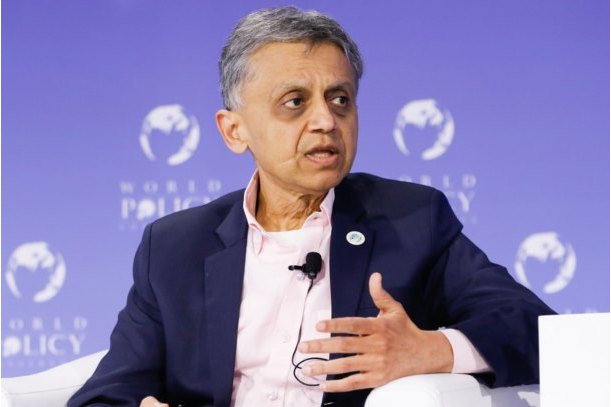
Ashoka Mody is Visiting Professor of International Economic Policy at the Woodrow Wilson School of Public and International Affairs at Princeton University. He is a former mission chief for Germany and Ireland at the International Monetary Fund. He is the author of EuroTragedy: A Drama in Nine Acts. Copyright: Project Syndicate
Other Features
-
Nigeria’s democratic illogic
Can a country achieve its lofty aspirations when its governance framework is openly contradicted by practice and by ...
-
Analysis of Nigeria’s new virtual asset taxation framework
The framework is technically rigorous and sound, but its success will depend heavily on administrative capacity and ...
-
No free ride: Uber’s African retreat
Nigeria hardly offered Uber a competition-free road. Uber was not even the country’s first ride-hailing ...
-
What will determine the next gold price movements
Gold still has strong bullish fundamentals over the medium term. However, the path toward higher levels is unlikely ...
-
What would make Sidi Ould Tah smile?
After a year in office, Sidi Ould Tah has begun to reshape how the African Development Bank raises money and prepares ...
-
Nigeria’s Paris Club debt deal: A factual rejoinder to Donald Duke
Obasanjo’s credit was never in danger and did not require Duke to vandalise everyone else’s contribution.
-
Where to sell Steam gift cards in Nigeria: Rates, apps and how to ...
See where to sell Steam gift cards in Nigeria, current 2026 Steam card rates, and how to get paid on ...
-
Nigeria is building a sustainable health financing future
Gavi’s US$500 million support will help protect Nigeria’s children over the next five years while ...
-
An analysis of the Executive Order on Virtual Assets 2026
The new presidential executive order addresses a real problem – the cost and risk of regulators working in ...


Most Popular News
- Dangote Refinery posts $1.82 billion profit ahead of landmark IPO
- AfDB approves $5.1 billion response to energy and fertiliser shocks
- Digital services boom widens global trade gap, UNCTAD says
- Alliance to End Plastic Waste reports progress on circular economy
- CBN elevates terrorism financing oversight as key supervisory priority
- MTN engages global bond investors as IHS Towers acquisition nears
Quick Search for Upcoming Events