How FG lied to Nigerians about its request for IMF facility
Feature Highlight
Ironically, the Buhari administration that has mostly denounced IMF programmes, is now the first Nigerian government to apply for a facility from the Fund since the late 1980s.
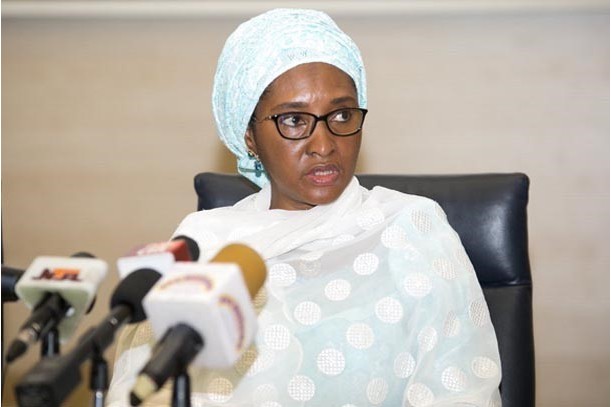
On Monday, April 6, 2020, the Minister of Finance and National Planning, Zainab Ahmed, announced that Nigeria had applied for $3.4 billion from the International Monetary Fund (IMF) under its Rapid Credit Facility (RCF). She said that the loan would be drawn from the country’s entire quota contribution to the IMF. According to her, the facility would not have any “conditionality” and Nigeria has no intention right now or in the foreseeable future to apply for a formal IMF programme.
As presented to Nigerians, this is an impossible loan application to the IMF. And much of the information provided to Nigerians is false. While Nigeria may not take a full-fledged IMF programme in the remaining three years of the second term of President Muhammadu Buhari’s administration, it is foreseeable that his successor would have to seriously consider an IMF programme. Such would be the parlous state the current administration is very likely to leave the fiscal position of the country in at the end of May 2023.
The next day after Ms. Ahmed’s announcement to the media, the Managing Director of the IMF, Kristalina Georgieva, issued a formal statement of acknowledgement of Nigeria’s application for its facility. But instead of the RCF, which Ms. Ahmed said the country had applied for, Ms. Georgieva announced that “Nigeria’s government has requested financial assistance under the Fund’s Rapid Financing Instrument (RFI).”
It is important to examine the discrepancy in the two statements and its potential implications. Nigeria’s request was made because the authorities believed the loan was needed to improve the capacity of the government to respond to the Covid-19 pandemic and the impact of oil prices that are significantly below the initial budgetary benchmark for 2020. Although the loan proposal is unlikely to be outrightly declined when it goes before IMF’s Executive Board, it may only be partially granted. The lower amount is bound to undermine the plan the government says it has developed to respond to the co-occurring crises.
On March 4, the IMF announced that it had made available a total of $50 billion for member states to address the economic shocks of the novel coronavirus. Of this amount, $10 billion was allocated to the RCF as a rapid-disbursing emergency financing for “low income” countries, at zero interest rate. The remaining $40 billion was earmarked for emergency disbursement to “emerging market” countries under the RFI.
Under IMF’s taxonomy, 59 countries, including Nigeria, are classified as low-income countries, or Low-Income Developing Countries (LIDCs), for exactitude. The LIDCs are the eligible member states of the IMF for the $10 billion Rapid Credit Facility. Many African countries, including Ghana, Senegal, Chad, Madagascar and Rwanda, have applied for the RCF. It is expected that many of the eligible poor countries will apply for the facility. This, therefore, raises a moral question as to why Nigeria alone would want to draw 34 per cent of the total facility.
However, the RCF is not subject to injudicious applications. The Facility has a disbursement limit of 25 per cent of a member’s quota under the “regular” (as opposed to exogenous shock) window of the IMF. There is the possibility of up to two disbursements during a twelve-month period. Accordingly, IMF says access to the RCF is limited to 50 per cent of the quota of eligible member states.
This provision limits Nigeria’s ability to draw up to $3.4 billion under the RCF, although the country’s quota contribution to the IMF covers the entire value. Nigeria’s assigned IMF quota is 2,454.5 million Special Drawing Rights (SDRs). This is equivalent to approximately $3.4 billion, based on SDR market exchange rate of SDR1 to $1.358 as of April 6, 2020.
It should also be noted, however, that under IMF’s Standby and Extended Arrangements, a member state can borrow up to 145 per cent of its quota contribution – which is a foreign reserves asset – in a year, and 435 per cent cumulatively. But these are full-fledged IMF programmes, which Nigeria has avoided since 1987. An IMF member state can also borrow SDRs from another member willing to lend the reserve asset. But all of these are not part of the current emergency facilities announced by the IMF.
The level of access under the Rapid Financing Instrument depends on the country’s balance of payments need, capacity to repay, outstanding IMF credit, and history. If Nigeria’s application was made under the RFI as the IMF MD said – contradicting the statement of the finance minister – the country could stand a better chance of getting its entire $3.4 billion request approved. While we may quibble on Nigeria’s ability to repay, the country is in serious need.
And, besides the fact that the RFI is four times larger than the RCF, IMF already envisaged that not all “emerging market” countries would need the facility.
It is not accurate to say that the RCF has no conditionalities at all. Yes, both the RCF and RFI do not require a full-fledged IMF programme. But under either of the facilities, the Fund will provide technical assistance to build the country’s capacity to implement comprehensive macroeconomic policies. The Buhari administration has resisted such assistance since 2016, by rote denunciation of the infamous IMF “conditionalities,” while the gap in government’s ability to implement sound macroeconomic policies continue to expand.
It is unwise to completely withdraw the entirety of the country’s quota contribution with the IMF in one fell swoop. Given the fiscal outlook of the country, it is unlikely to be able to repay the $3.4 billion facility before 2023. Nigeria would not have defaulted by then, as financial assistance provided under the RCF has a grace period of 5½ years and a final maturity of 10 years. Under the RFI, repayment is within 3¼ to 5-year period. But Nigeria’s standing with the IMF would be less assured.
While Nigeria has been a member of the IMF since 1961, the reticence for the conditionalities of its lending programmes made many past governments to avoid IMF facilities. Under the Stand-By Arrangements, IMF approved loans for Nigeria in 1987, 1989, 1991 and 2000 and the facilities expired without being utilised. Nigeria’s quota contribution has been left intact over the years.
Ironically, the Buhari administration that has mostly denounced IMF programmes, is now the first Nigerian government to apply for a facility from the Fund since the late 1980s. It is mere grandstanding, and an attempt to deceive Nigerians, to assert that what the country did was to apply to draw on its quota contribution. Under IMF’s article of membership, such withdrawal is a loan.
The inaccurate information provided to Nigerians by the finance minister may be unintentional; it could be that the loan application was incompetently drawn up. But more importantly, though, is the need to preserve Nigeria’s relationship with the IMF.
Jide Akintunde is Managing Editor, Financial Nigeria publications. He is also Director, Nigeria Development and Finance Forum
Other Features
-
No free ride: Uber’s African retreat
Nigeria hardly offered Uber a competition-free road. Uber was not even the country’s first ride-hailing ...
-
What will determine the next gold price movements
Gold still has strong bullish fundamentals over the medium term. However, the path toward higher levels is unlikely ...
-
What would make Sidi Ould Tah smile?
After a year in office, Sidi Ould Tah has begun to reshape how the African Development Bank raises money and prepares ...
-
Nigeria’s Paris Club debt deal: A factual rejoinder to Donald Duke
Obasanjo’s credit was never in danger and did not require Duke to vandalise everyone else’s contribution.
-
Where to sell Steam gift cards in Nigeria: Rates, apps and how to ...
See where to sell Steam gift cards in Nigeria, current 2026 Steam card rates, and how to get paid on ...
-
Nigeria is building a sustainable health financing future
Gavi’s US$500 million support will help protect Nigeria’s children over the next five years while ...
-
An analysis of the Executive Order on Virtual Assets 2026
The new presidential executive order addresses a real problem – the cost and risk of regulators working in ...
-
Nigeria’s digital finance push needs a human override ledger
Nigeria should require that every consequential AI-enabled financial workflow maintain a human-override ledger.
-
Nigeria's maize waste could power a new renewable financing model ...
For a country still importing the bulk of its ideas on biomass financing from elsewhere, the data to build a ...


Most Popular News
- MTN engages global bond investors as IHS Towers acquisition nears
- Export development fund expands to Senegal and Liberia
- Oil prices stay elevated as Middle East tensions raise supply concerns
- Dangote Refinery posts $1.82 billion profit ahead of landmark IPO
- Uber leaves Nigeria and Uganda as part of wider global restructuring
- NADF calls for stronger institutions to unlock agricultural investment
Quick Search for Upcoming Events