Africa can double agricultural productivity in the next five years - IFAD president
Summary
Nwanze said supporting small-scale farmers, investing in rural areas can help meet Africa’s development objectives.
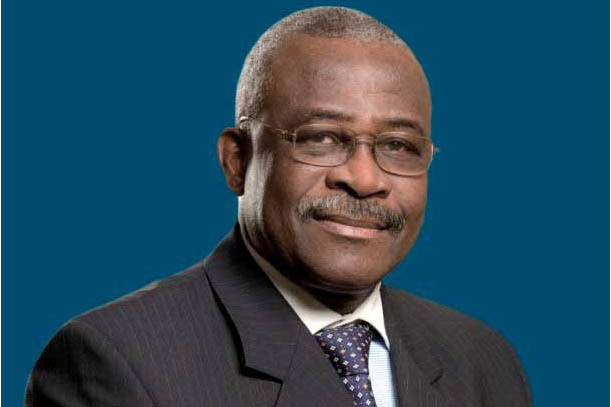
President of the International Fund for Agricultural Development (IFAD), Kanayo Nwanze, has said that with the right investments, Africa could double its agricultural productivity in the next five years.
He stated this today ahead of the Grow Africa Investment Forum (GAIF) 2016 and the World Economic Forum on Africa (WEF), both taking place this week in Kigali, Rwanda.
GAIF, which will hold on May 10-11, is the largest gathering of public and private-sector investors in the African agriculture sector. The forum will promote investment opportunities, improve investment climate and accelerate work on building efficient regional markets for specific crops such as rice, cassava and potato.
The IFAD president said supporting small-scale farmers and investing in rural areas can enable countries to meet their broader development objectives, including poverty reduction.
Despite the prediction by the International Monetary Fund (IMF) last week that GDP growth in Sub-Saharan Africa (SSA) is expected to slow to 3 percent in 2016, its slowest pace in 15 years, Nwanze said Africa is still a continent of unprecedented opportunity.
“Half of the world’s uncultivated land which is suited for growing food crop is in Africa,” said Nwanze. “Investments in agriculture can generate great riches for the continent and lift millions out of poverty and hunger. There are high returns to those countries that take agriculture seriously.”
Africa has 25 percent of the world’s arable land, yet it generates only 10 percent of global agricultural output. With a population growth of 2.7 percent annually, the United Nations agency said food demand on the continent is expected to double every 30 years. IFAD advised that investments that encourage increased agricultural production would cut Africa’s annual $35 billion food import bill, keeping this money on the continent to be used for broader economic development.
However, Nwanze said that investments alone will not transform the continent. He said governments need to get their own houses in order and ensure that there is a strong commitment to policies and incentives that encourage higher food production by smallholder farmers.
“We need to work together to harness the continent’s potential and this means investing in small-scale farmers who are the backbone of African agriculture,” the IFAD president said.
Nwanze will participate in a high-level panel discussion at Grow Africa on “Accelerating Agricultural Transformation.” He will also moderate “Rethinking Agriculture,” a session on innovative ways to create sustainable food systems at the WEF, which is holding on May 11-13.
Related
-
Strategies to minimise food waste and protect the environment
When a glass of milk is poured down the sink, around 255 litres of water is wasted.
-
FAO to establish Farmer Field Schools in Nigeria to boost agriculture
The FFS is an initiative of FAO that supports the most at-risk farming households.
-
Finnfund invests $6 million to expand aquaculture in Zambia
Finnfund made the investment in an integrated tilapia aquaculture company, producing 12,000 tonnes of tilapia annually.

Sustainable Development Section Sponsor
-
Access Bank Plc ...Financing the future

Most Popular